

Advanced Healing & Recovery Blend
Active Substances:
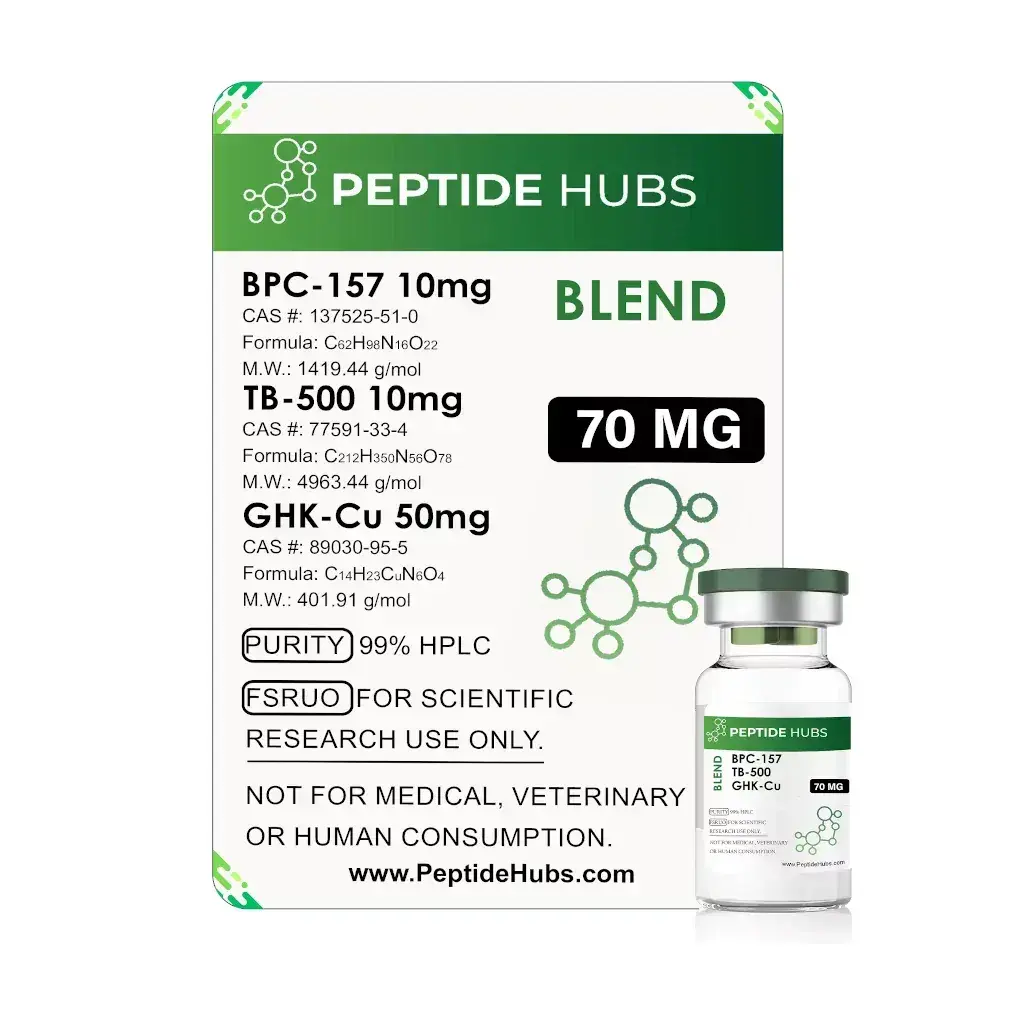
- BPC-157 10 mg
- TB-500 10 mg
- GHK-Cu 50 mg
Manufacturer: Peptide Hubs
Unit: 2 mL Vial (70 mg total blend)
Form: Lyophilized Powder
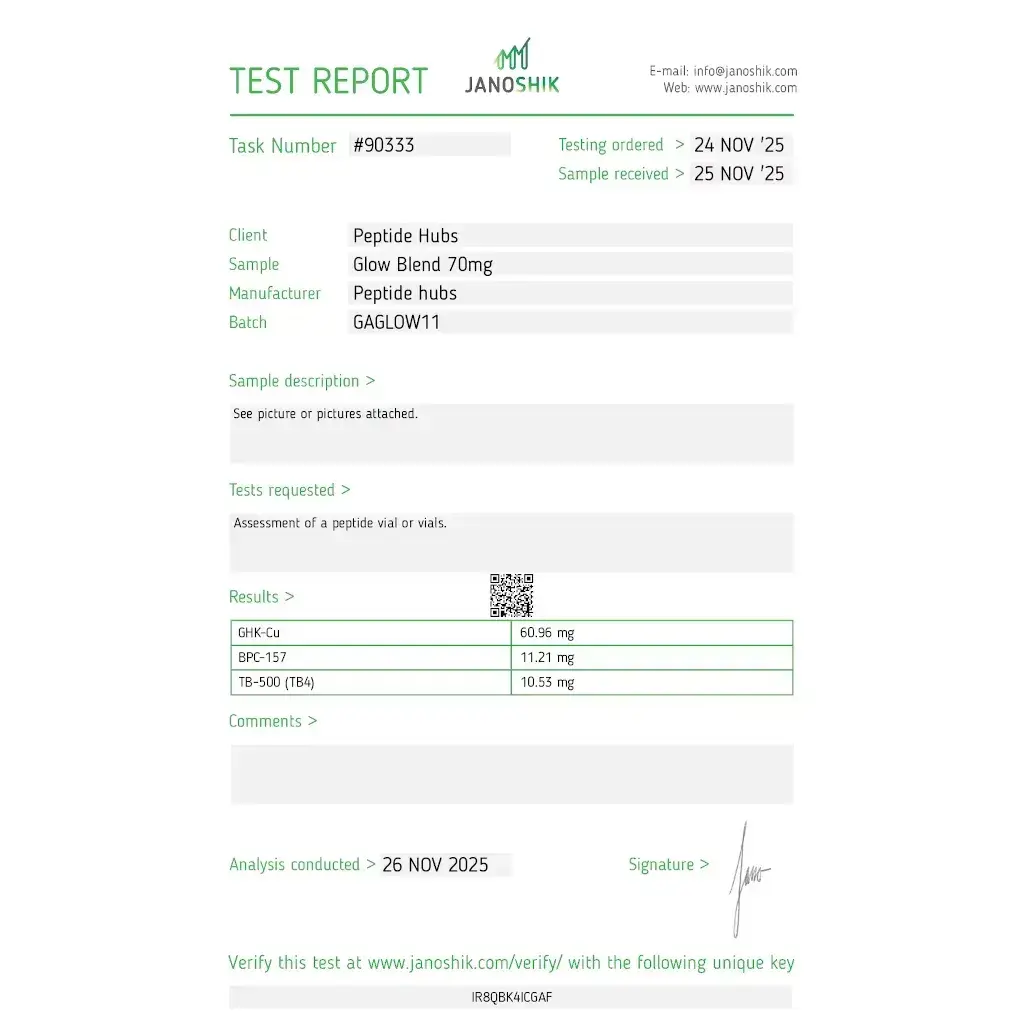
Laboratory Tested: View Lab Result
USA Domestic: 2-7 Days Delivery
International: 5-20 Days Delivery
Glow Blend represents the pinnacle of synergistic peptide research, combining three of the most powerful reparative and regenerative compounds into a single 70 mg lyophilized powder vial. This meticulously formulated blend contains BPC-157 (10 mg) for systemic healing and organ protection, TB-500 (Thymosin Beta-4, 10 mg) for cellular migration and connective tissue repair, and GHK-Cu (50 mg) for gene expression reprogramming, collagen synthesis, and anti-inflammatory action. With an independent third-party lab test confirming an exceptional total purity of 82.7 mg—exceeding the labeled 70 mg—researchers receive a premium, precisely mixed product. For athletes, bodybuilders, and recovery researchers, the Glow Blend offers an unparalleled, all-in-one investigative model for studying accelerated injury healing, enhanced recovery from intense training, systemic anti-aging effects, and improved skin and connective tissue health.
Each sterile 2 mL vial contains a total of 70 mg of active peptides in a precise, pre-mixed ratio:
The blend is homogeneous, ensuring consistent dosing of all three peptides upon reconstitution. It requires bacteriostatic water for preparation.
The Glow Blend is engineered for research into comprehensive recovery and resilience. Its investigational benefits are synergistic and multi-faceted: dramatically accelerated healing of musculoskeletal injuries (tendons, ligaments, muscle tears) through combined angiogenic (BPC-157), cell-migratory (TB-500), and collagen-stimulating (GHK-Cu) actions; enhanced recovery from intense training by reducing systemic inflammation and oxidative stress; improved skin health, wound healing, and reduction of scar tissue; potential support for joint and connective tissue integrity, crucial for heavy lifters; and systemic anti-aging and repair effects that may improve overall training resilience and longevity in sport. This blend allows researchers to study a holistic, multi-pathway approach to physical repair and regeneration.
Each component of the Glow Blend has a strong foundation in scientific literature. BPC-157 has been studied for its remarkable effects on tendon-to-bone healing, gastrointestinal protection, and organ repair. TB-500 is researched for wound healing, cell migration, and anti-inflammatory properties. GHK-Cu is well-documented for skin remodeling, collagen production, and anti-inflammatory/antioxidant effects. According to a review on healing peptides in resources like the National Institutes of Health (NIH), peptides like BPC-157 and TB-500 represent promising targets for tissue repair.
The Glow Blend works through a complementary, multi-stage mechanism:
Together, they manage inflammation, recruit repair cells, rebuild structure, and optimize the local cellular environment for healing—covering the entire spectrum of tissue repair.
Research protocols for this potent blend should account for the combined dose. A common investigative approach is to administer 250-500 mcg of the total blend per kilogram of body weight, daily, via subcutaneous injection. This often translates to a total daily dose in the range of 1.5 mg to 3.5 mg for an average subject, typically split into two injections (AM/PM). For localized injuries, perilesional administration near the site can be explored. Research cycles are typically 4-8 weeks for acute injury models, or used intermittently during intense training blocks for recovery support.
Research dosing for female subjects follows the same microgram-per-kilogram principle, generally within the 250-500 mcg/kg range. There is no evidence to suggest gender-specific adjustments for these healing mechanisms. The potential for injection site staining from the GHK-Cu component should be considered in study design, especially for visible areas. Conservative dosing within the range is recommended initially.
The components have varying half-lives: BPC-157 and TB-500 have relatively short plasma half-lives but induce long-lasting biological effects. GHK-Cu also acts through persistent gene expression changes. The blend's effects are cumulative and not dependent on constant plasma levels. Once-daily or twice-daily dosing is sufficient in research to maintain the signaling necessary for sustained repair processes.
Research on the individual components shows excellent safety profiles, which translates to the blend. The most notable effect is the potential for temporary blue-green staining at the injection site from the GHK-Cu component, which fades over weeks. Rare, mild effects could include transient lightheadedness (associated with BPC-157 in some) or minor irritation at the injection site. The blend is not associated with hormonal disruption or significant systemic toxicity at research doses.
The blend is contraindicated in research involving subjects with known malignancies, due to the cell-proliferative nature of the healing peptides. Caution is advised for subjects with copper metabolism disorders (like Wilson's disease) due to GHK-Cu. It should not be used in subjects with known hypersensitivity to any component. Research involving pregnant subjects or those with severe, uncontrolled medical conditions should be designed with extreme caution. This blend is for laboratory research only.
The primary risks of excessive dosing would be an increase in injection site reactions, including more pronounced staining from GHK-Cu. Given the excellent safety margins of the individual peptides, acute toxicity is unlikely. However, responsible research adheres to established microgram-per-kilogram dosing to study the synergistic effect without unnecessary waste or potential for mild side effects.
While the Glow Blend is a complete stack itself, it can be researched alongside other compounds for targeted outcomes. It is generally not stacked with other strong healing peptides to avoid overcomplication. However, it can be combined with:
The product is supplied as one sterile glass vial containing 70 mg of the Glow Blend as a lyophilized powder. Due to the GHK-Cu, the powder will have a distinctive blue-green hue, indicating proper copper chelation. The vial is sealed with a rubber stopper and aluminum crimp to ensure sterility. Packaging is discreet and secure.
For maximum stability, store the lyophilized powder at or below -20°C (-4°F). For short-term use, refrigeration at 2-8°C (36-46°F) is acceptable. Protect from light, especially due to the GHK-Cu. After reconstitution with bacteriostatic water, the solution must be refrigerated, protected from light, and used within 7-10 days to maintain the potency of all three peptides.
The scientific rationale for combining these peptides is based on their non-overlapping, complementary mechanisms within the healing cascade. Researchers should consult the extensive individual literatures on BPC-157 (gastroprotective and angiogenic studies), TB-500 (wound healing and cell migration research), and GHK-Cu (dermatology and gene expression studies) to fully appreciate the potential synergies. This blend embodies a translational research approach, moving from single-target to multi-target intervention in repair processes.
The Glow Blend is a synergistic combination of BPC-157, TB-500, and GHK-Cu. They are combined because they work on different, complementary stages of the healing and repair cascade. BPC-157 promotes blood flow and initiates repair, TB-500 directs cell migration to the injury site, and GHK-Cu reprograms cells to rebuild collagen and reduce inflammation. Together, they create a comprehensive research model for systemic and tissue-specific recovery that is greater than the sum of its parts.
Yes. An independent third-party lab test (November 2025) confirms the total peptide content is 82.7 mg against a label claim of 70 mg, demonstrating significant overfill and high purity. The reported blue-green color of the powder also visually confirms the presence of properly chelated GHK-Cu. This verification ensures researchers are working with a legit, accurately formulated, and potent blend for their studies.
Primary research applications include: accelerated healing of acute musculoskeletal injuries (sprains, strains, tears), enhanced recovery from intense exercise and reduction of systemic inflammation, improvement in skin wound healing and reduction of scar tissue, potential support for chronic tendonitis or joint issues, and studying systemic anti-aging and repair mechanisms. It's a versatile tool for holistic recovery and resilience research.
Dosing is based on the total weight of the blend, not the individual peptides. Since the blend is pre-mixed in a set ratio (approx. 1:1:5 of BPC:TB:GHK-Cu), you calculate your dose based on the total micrograms or milligrams of the combined powder. Common research doses range from 250-500 mcg of the total blend per kg of body weight daily. This simplifies administration compared to measuring and injecting three separate peptides.
Yes, due to the GHK-Cu component, subcutaneous injections of the Glow Blend can cause temporary blue or greenish discoloration (like a bruise) at the injection site. This is harmless and fades over a period of days to weeks as the copper is metabolized. To minimize this in research, rotate injection sites frequently and consider administration in less visible areas. The staining is a cosmetic side effect of an active ingredient.
Please log in to write Glow Blend 70 mg review.
Sterile Diluent
Active Substance: Sterile Water with 0.9% Benzyl Alcohol
Manufacturer: Peptide Hubs
Unit: 10 mL Vial (0.9% Benzyl Alcohol)
Form: Sterile Solution
Laboratory Tested: View Lab Result
USA Domestic: 2-7 Days Delivery
International: 5-20 Days Delivery
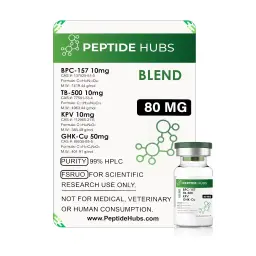
Research Peptide Blend
Active Substances:
- Ac-KPV-NH2 10 mg
- BPC 157 10 mg
- TB 500 10 mg
- GHK-Cu 50 mg
Manufacturer: Peptide Hubs
Unit: 2 mL Vial (80 mg/vial)
Form: Lyophilized Powder
Laboratory Tested: View Lab Result
USA Domestic: 2-7 Days Delivery
International: 5-20 Days Delivery
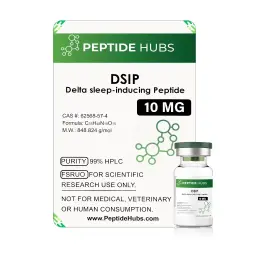
Neuropeptide
Active Substance: DSIP (Delta Sleep-Inducing Peptide)
Manufacturer: Peptide Hubs
Unit: 2 mL Vial (10 mg/vial)
Form: Lyophilized Powder
USA Domestic: 2-7 Days Delivery
International: 5-20 Days Delivery
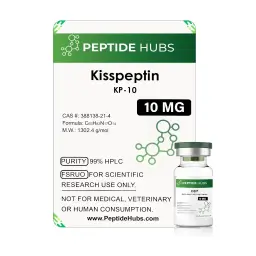
Neuropeptide (GnRH Secretagogue)
Active Substance: Kisspeptin-10
Manufacturer: Peptide Hubs
Unit: 2 mL Vial (10 mg/vial)
Form: Lyophilized Powder
USA Domestic: 2-7 Days Delivery
International: 5-20 Days Delivery
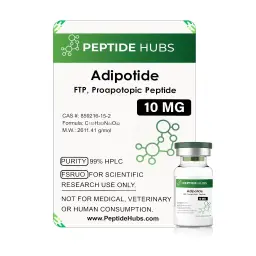
Research Peptide/Fat Loss Peptide
Active Substance: Adipotide (FTPP)
Manufacturer: Peptide Hubs
Unit: 2 mL Vial (10 mg/vial)
Form: Lyophilized Powder
Laboratory Tested: View Lab Result
USA Domestic: 2-7 Days Delivery
International: 5-20 Days Delivery
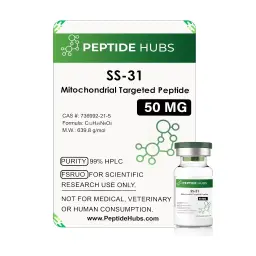
Mitochondrial-Targeted Tetrapeptide
Active Substance: SS-31 (Elamipretide)
Brand: Peptide Hubs
Unit: 2 mL Vial (50 mg/vial)
Form: Lyophilized Powder
USA Domestic: 2-7 Days Delivery
International: 5-20 Days Delivery
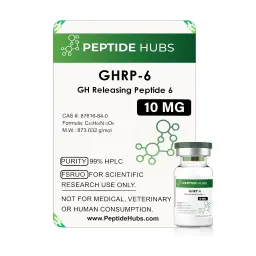
Growth Hormone Releasing Peptide
Active Substance: GHRP-6 (His-D-Trp-Ala-Trp-D-Phe-Lys-NH2)
Manufacturer: Peptide Hubs
Unit: 2 mL Vial (10 mg/vial)
Form: Lyophilized Powder
USA Domestic: 2-7 Days Delivery
International: 5-20 Days Delivery
