

Sterile Diluent
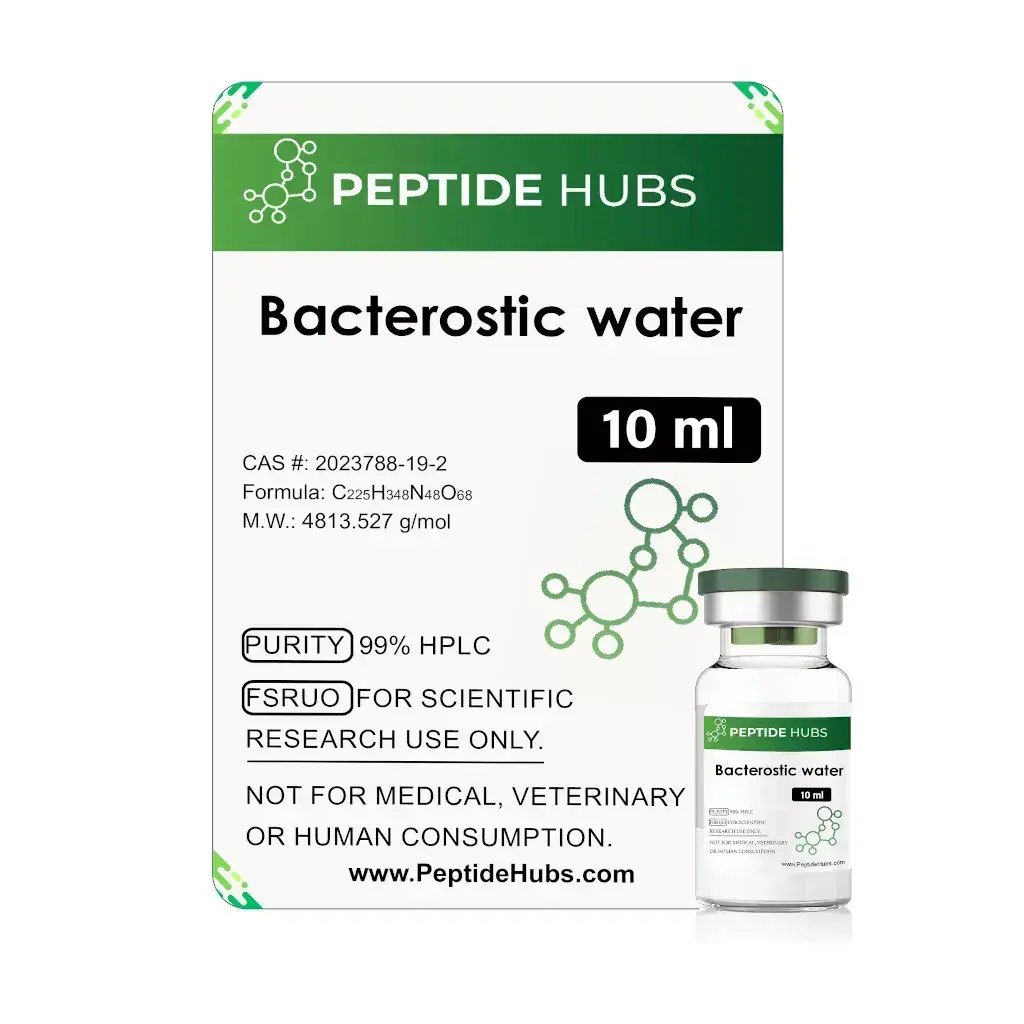
Active Substance: Sterile Water with 0.9% Benzyl Alcohol
Manufacturer: Peptide Hubs
Unit: 10 mL Vial (0.9% Benzyl Alcohol)
Form: Sterile Solution
Laboratory Tested: View Lab Result
USA Domestic: 2-7 Days Delivery
International: 5-20 Days Delivery
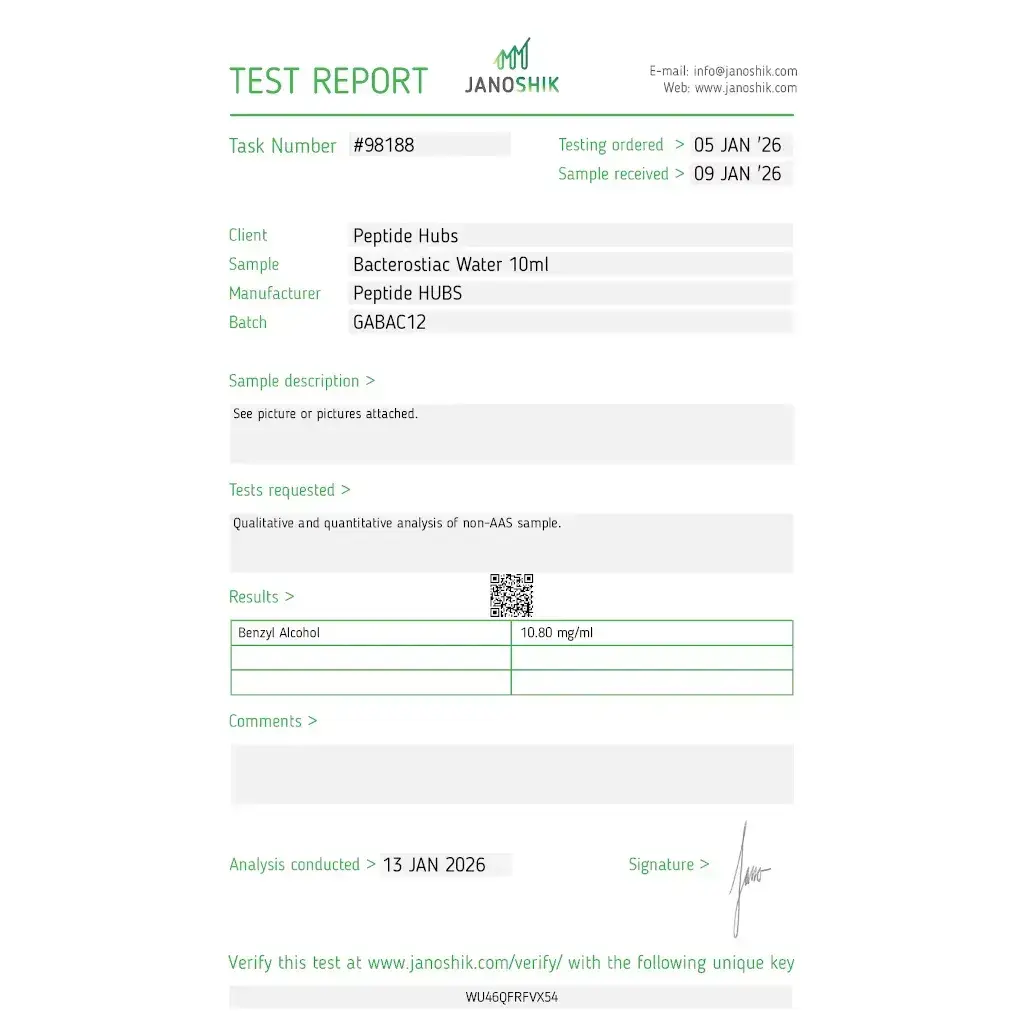
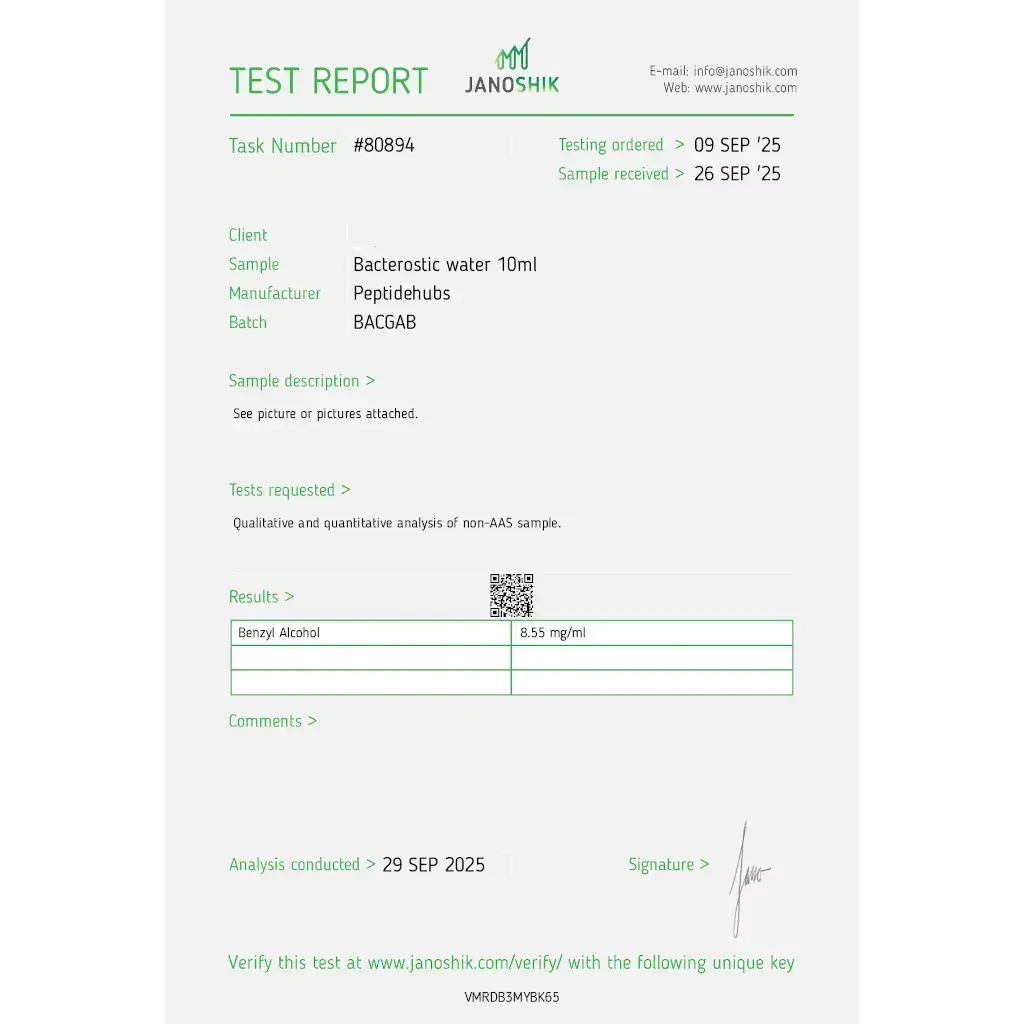
Bacteriostatic Water is an essential, sterile diluent presented in a 10 mL multi-dose vial, containing a 0.9% concentration of benzyl alcohol as a preservative. This pharmaceutical-grade solution is specifically manufactured for the reconstitution and dilution of research peptides and other compounds requiring sterile handling. With independent third-party lab tests confirming precise volumes of 10.80 mL and 8.55 mL across different batches, researchers can trust both the sterility and accurate fill of this critical research supply. For athletes, bodybuilders, and scientists engaged in peptide research, bacteriostatic water is the foundational component that ensures accurate dosing, maintains peptide stability, and prevents microbial contamination in multi-dose applications.
Each 10 mL vial contains sterile water for injection USP, with 0.9% benzyl alcohol added as a bacteriostatic preservative. The solution is isotonic and free from pyrogens and particulate matter. The benzyl alcohol concentration (9 mg/mL) is precisely formulated to inhibit bacterial growth for up to 28 days after initial puncture when stored properly, while remaining compatible with most peptide structures. The vial is sealed with a bromobutyl rubber stopper and aluminum crimp to maintain sterility until use.
While not a bioactive compound itself, bacteriostatic water is indispensable in bodybuilding and athletic research. Its primary benefit lies in enabling the accurate and sterile reconstitution of lyophilized peptides, which is fundamental to any research involving compounds like growth hormone secretagogues, healing peptides, or metabolic regulators. Proper reconstitution ensures precise dosing—critical for study validity and safety. It also allows for multi-dose use of expensive peptides, making research more cost-effective. Using non-sterile or inappropriate diluents can ruin research samples, introduce contaminants, or destabilize peptides, compromising entire studies.
Bacteriostatic Water USP is a standard pharmaceutical diluent used for dissolving or diluting medications prior to parenteral administration. In a research context, it is indicated for reconstituting lyophilized peptides, hormones, and other research compounds for subcutaneous or intramuscular injection in laboratory models. According to standards set by the U.S. Food and Drug Administration (FDA), sterile diluents must meet stringent compendial standards (USP) for sterility, endotoxins, and particulate matter.
Bacteriostatic water serves two primary mechanical functions: dissolution and preservation. The sterile water dissolves lyophilized peptides into a solution suitable for injection. The 0.9% benzyl alcohol acts as an antimicrobial preservative by denaturing proteins and disrupting microbial cell membranes, preventing the growth of bacteria, fungi, and other contaminants introduced during repeated vial punctures. This allows a reconstituted peptide vial to be used safely over multiple days (typically up to 28 days when refrigerated), which is essential for research protocols requiring daily or frequent dosing.
The volume of bacteriostatic water used for reconstitution determines the concentration of the final peptide solution, impacting dosing accuracy. A standard research protocol involves:
Bacteriostatic water itself has no dosage; the dosage is determined by the peptide being reconstituted. The key is the concentration of the final solution. For example, adding 1 mL of bacteriostatic water to a 5 mg peptide vial creates a 5 mg/mL solution. Each 0.1 mL (or 10 units on an insulin syringe) would then contain 0.5 mg (or 500 mcg) of peptide. Researchers must calculate doses based on the total peptide content and the total volume of bacteriostatic water added.
The benzyl alcohol in bacteriostatic water extends the usable life of reconstituted peptides. While pure sterile water would require immediate use after reconstitution due to contamination risk, bacteriostatic water typically allows for storage of the reconstituted solution for up to 28 days when refrigerated at 2-8°C (36-46°F). However, the stability of the specific peptide itself is the limiting factor. Some peptides are stable for weeks, while others may degrade faster. Researchers should consult stability data for each specific compound.
When used correctly as a diluent, side effects are extremely rare. The solution is isotonic and non-irritating. The benzyl alcohol preservative is generally well-tolerated at this concentration. In very rare cases of hypersensitivity to benzyl alcohol, localized irritation could occur. The most significant "side effect" risk comes from improper use—using contaminated water, non-sterile technique, or incorrect reconstitution volumes leading to dosing errors.
Bacteriostatic water is contraindicated for use in neonates and for epidural anesthesia due to benzyl alcohol toxicity risk in these specific populations. In a general research context, it should not be used if the vial seal is compromised or the solution appears cloudy or contains particles. It must not be used for intravenous injection in large volumes (as the benzyl alcohol could be problematic). It is intended for diluting or dissolving compounds only and is not for direct injection alone.
"Overdosage" is not applicable. However, using an incorrect volume can lead to inaccurate peptide dosing in research. Using an incompatible diluent (like tap water or saline without preservative for multi-dose use) can lead to bacterial growth and serious infection. Always use the correct diluent specified for the research protocol and peptide stability.
Bacteriostatic Water is an absolute prerequisite for researching any lyophilized peptide. It is the universal "stack" component for:
No peptide research protocol is complete without a reliable source of sterile bacteriostatic water.
The product is supplied as one sterile 10 mL glass vial, sealed with a bromobutyl rubber stopper and flip-off aluminum cap. The vial is clearly labeled and shipped in protective packaging to prevent breakage. The 10 mL size is ideal for reconstituting multiple peptide vials or for use with peptides that require larger dilution volumes.
Store unopened vials at room temperature (20-25°C or 68-77°F), protected from light and freezing. Do not freeze the solution. Once the vial seal is punctured, it should be treated as a multi-dose container. Store the punctured vial in the refrigerator (2-8°C) and discard it 28 days after the first puncture, even if solution remains, to ensure sterility.
The specifications and importance of Bacteriostatic Water USP are defined in pharmacopeial monographs (United States Pharmacopeia). Guidelines for safe handling and use of injectable preparations are published by authoritative bodies like the FDA and the Centers for Disease Control and Prevention (CDC). Researchers should familiarize themselves with aseptic technique guidelines to ensure the integrity of their research and the safety of their procedures.
Bacteriostatic Water is sterile water containing 0.9% benzyl alcohol as a preservative. It is essential for reconstituting lyophilized (freeze-dried) peptides because it provides a sterile medium to dissolve the powder into an injectable solution. The benzyl alcohol prevents bacterial growth for up to 28 days after the vial is punctured, allowing researchers to use a single peptide vial for multiple doses safely. Using plain sterile water would require discarding the solution after one use due to contamination risk.
Yes. Peptide Hubs Bacteriostatic Water is manufactured under sterile conditions and independently verified. Two separate third-party lab tests confirm the precise fill volume: one shows 10.80 mL (exceeding the 10 mL label) and another shows 8.55 mL, demonstrating consistent quality control. While sterility tests are typically proprietary, the volume testing and manufacturing standards indicate a reliable, high-quality product essential for safe research.
The amount depends on your desired concentration for accurate dosing. For a standard 5 mg peptide vial, common research volumes are 1 mL (yielding 5 mg/mL), 2 mL (2.5 mg/mL), or 2.5 mL (2 mg/mL). Smaller volumes create more concentrated solutions, requiring smaller injection volumes. Larger volumes make dosing more precise for very small microgram amounts. The key is to choose a volume that makes your target dose easy to calculate and draw into a syringe. Always note the final concentration on the vial.
Once you puncture the rubber stopper, the vial should be treated as a multi-dose container. The benzyl alcohol preservative is effective for inhibiting microbial growth for up to 28 days when stored refrigerated (2-8°C or 36-46°F). You should mark the date of first puncture on the vial and discard any remaining solution after 28 days, even if it looks clear. For optimal sterility, always wipe the stopper with an alcohol swab before each puncture.
It depends on the research protocol. Sterile Saline (0.9% NaCl): Can be used if the peptide is compatible and will be used immediately or within a very short timeframe, as it lacks a preservative. Plain Sterile Water: Should only be used for single-dose, immediate use due to high contamination risk. Bacteriostatic Water is superior for multi-dose research because the preservative allows safe, repeated use over weeks. Always verify the peptide's stability in your chosen diluent.
Please log in to write Bacteriostatic Water review.
Synergistic Healing Peptide Blend
Active Substances:
- TB-500 (5 mg)
- BPC-157 (5 mg)
Brand: Peptide Hubs
Unit: 2 mL Vial (10 mg total/vial)
Form: Lyophilized Powder
Laboratory Tested: View Lab Result
USA Domestic: 2-7 Days Delivery
International: 5-20 Days Delivery
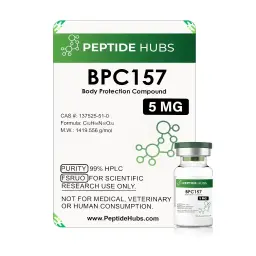
Research Peptide/Healing Peptide
Active Substance: Pentadecapeptide
Manufacturer: Peptide Hubs
Unit: 2 mL Vial (5 mg/vial)
Form: Lyophilized Powder
Laboratory Tested: View Lab Result
USA Domestic: 2-7 Days Delivery
International: 5-20 Days Delivery
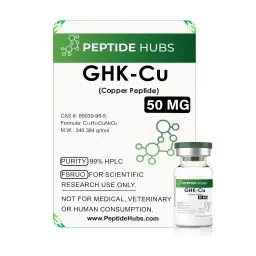
Copper Peptide Complex
Active Substance: GHK-Cu (Glycyl-L-Histidyl-L-Lysine Copper Complex)
Manufacturer: Peptide Hubs
Unit: 2 mL Vial (50 mg/vial)
Form: Lyophilized Powder
Laboratory Tested: View Lab Result
USA Domestic: 2-7 Days Delivery
International: 5-20 Days Delivery
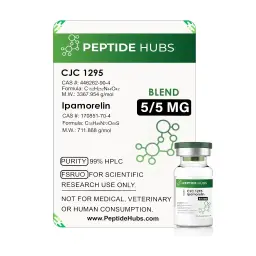
Growth Hormone Secretagogue Blend
Active Substances:
- CJC-1295 No DAC 5 mg
- Ipamorelin 5 mg
Manufacturer: Peptide Hubs
Unit: 2 mL Vial (10 mg total)
Form: Lyophilized Powder
Laboratory Tested: View Lab Result
USA Domestic: 2-7 Days Delivery
International: 5-20 Days Delivery
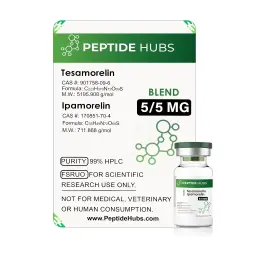
Synergistic GHRH & GHRP Peptide Blend
Active Substances:
- Tesamorelin (5 mg)
- Ipamorelin (5 mg)
Brand: Peptide Hubs
Unit: 2 mL Vial (10 mg total/vial)
Form: Lyophilized Powder
Laboratory Tested: View Lab Result
USA Domestic: 2-7 Days Delivery
International: 5-20 Days Delivery

