

Research Peptide Blend
Active Substances:
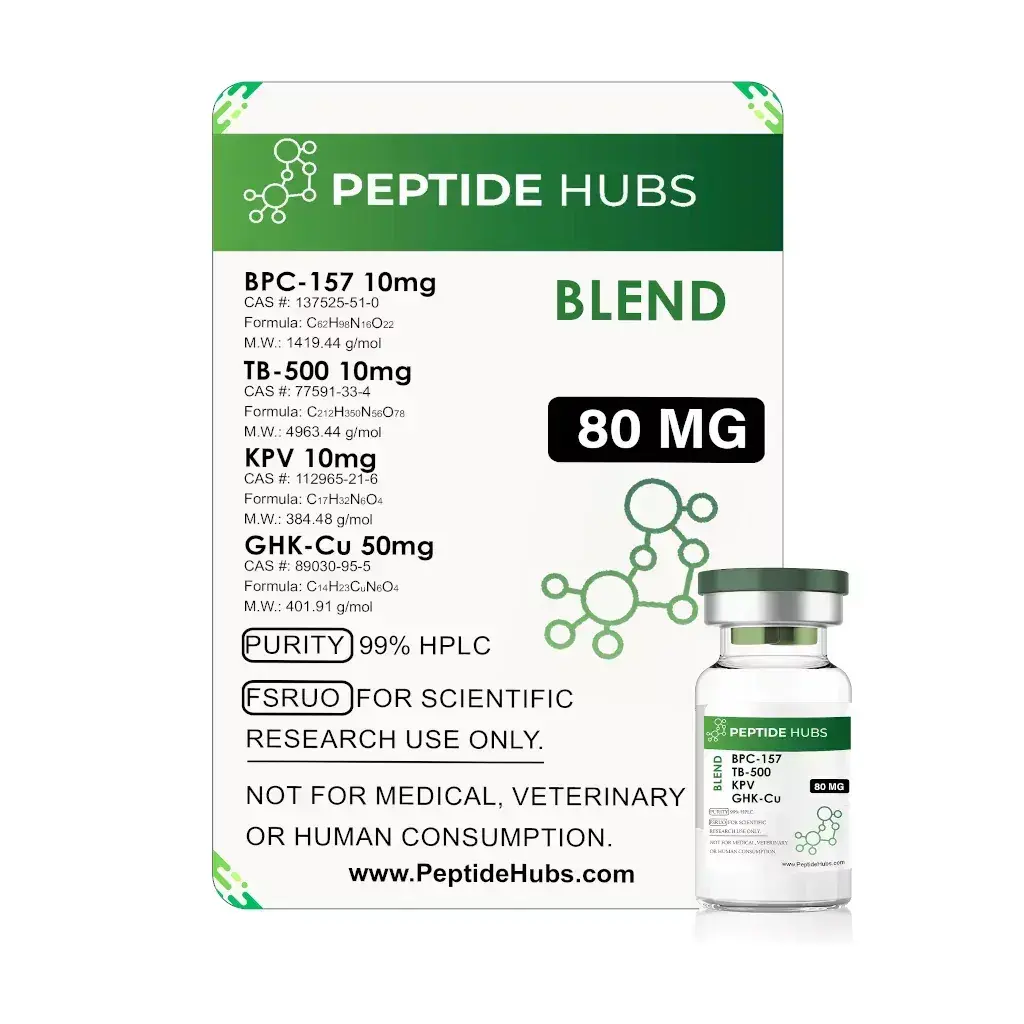
- Ac-KPV-NH2 10 mg
- BPC 157 10 mg
- TB 500 10 mg
- GHK-Cu 50 mg
Manufacturer: Peptide Hubs
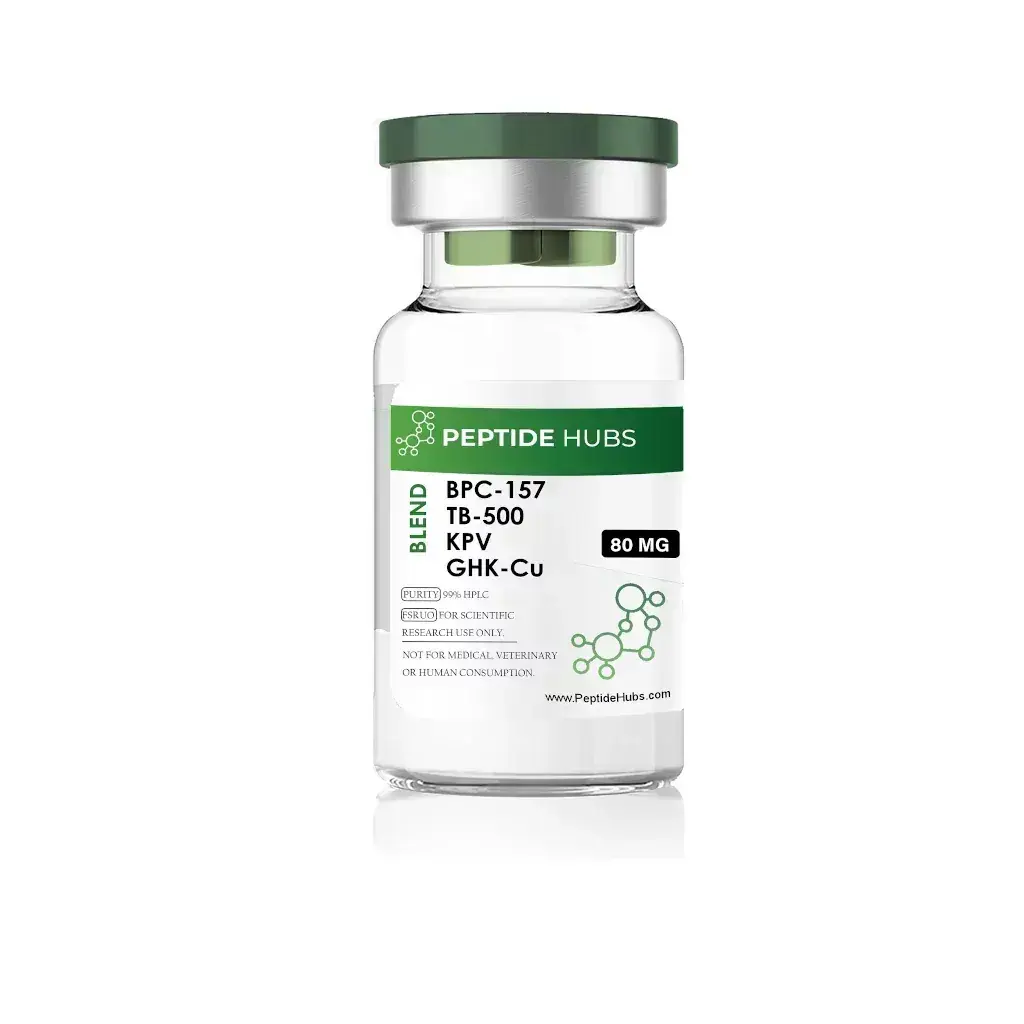
Unit: 2 mL Vial (80 mg/vial)
Form: Lyophilized Powder
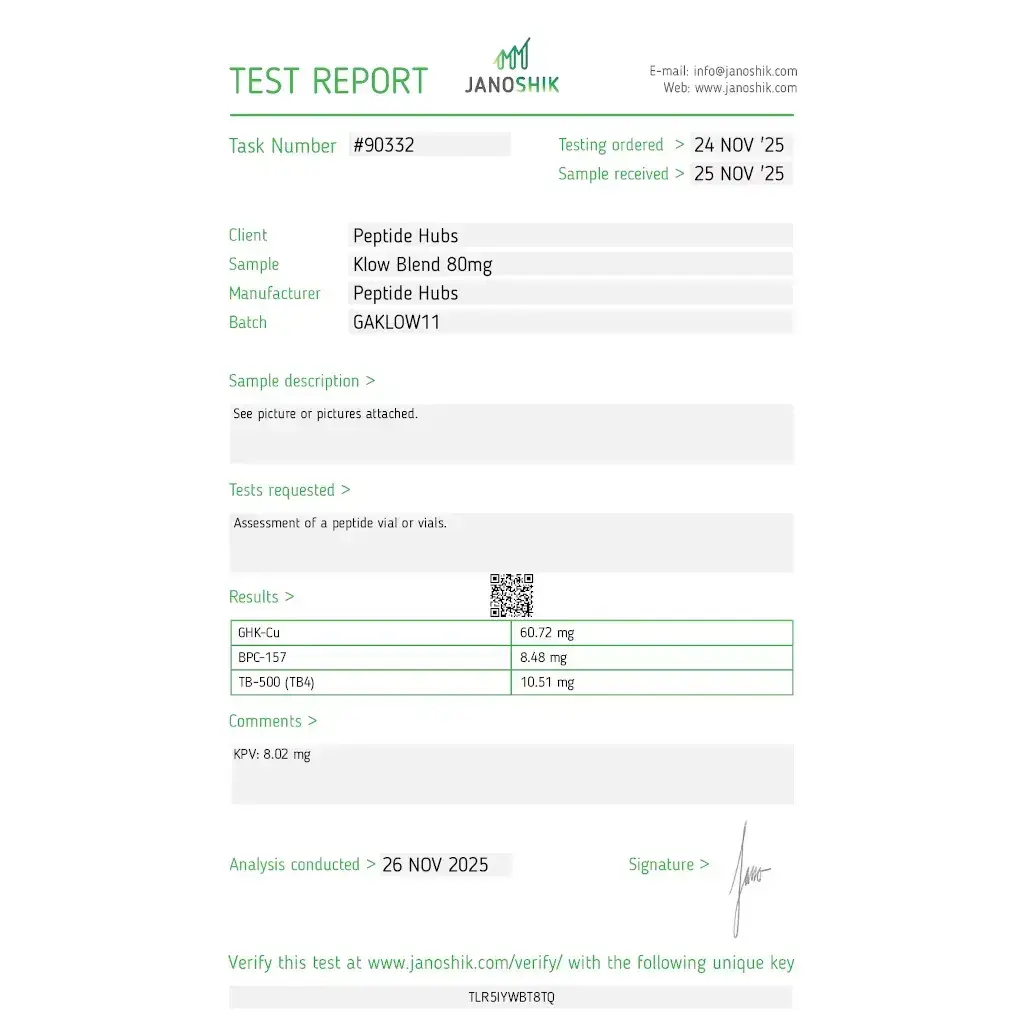
Laboratory Tested: View Lab Result
USA Domestic: 2-7 Days Delivery
International: 5-20 Days Delivery
Klow Blend by Peptide Hubs represents a cutting-edge formulation in the research peptide space, combining four potent bioactive compounds into a single 80 mg lyophilized vial. Specifically engineered for investigative purposes, this blend brings together KPV, BPC 157, TB 500, and GHK-Cu to create a synergistic research compound. Manufactured under strict quality control protocols and verified by independent third-party laboratory testing, Klow Blend offers researchers a reliable and precisely dosed tool for scientific inquiry. The product's multi-target approach makes it a subject of interest in various research domains, particularly in studies exploring tissue support mechanisms.
Each 2 mL vial contains 80 mg of lyophilized peptide powder with the following exact composition:
The lyophilized form ensures stability and extended shelf life, requiring reconstitution with bacteriostatic water or sterile saline before research application.
In controlled research environments, Klow Blend presents several areas of scientific interest:
While this product is sold for research purposes only and not for human consumption, previous scientific literature has explored similar compounds in various contexts. According to a review published in the National Library of Medicine, peptides like BPC 157 and TB-500 have been investigated in models of tissue injury. Additionally, research on GHK-Cu has appeared in dermatological studies examining its effects on collagen production and antioxidant activity in skin models.
Important: The following information is derived from published research on individual components and should only guide experimental design in appropriate research models. Always consult institutional protocols.
The elimination half-lives of the components vary significantly: BPC 157 and KPV have relatively short active periods (4-6 hours), while TB 500 and GHK-Cu demonstrate longer activity windows (up to several days). This combination creates both immediate and sustained research effects in appropriate models. The blend is designed to provide continuous investigative coverage when administered according to established research protocols.
In research settings, investigators should monitor for expected biological responses consistent with the pharmacological profiles of the individual components. These may include changes in local tissue response markers, alterations in inflammatory cytokine profiles in tissue samples, and histological evidence of tissue remodeling. Any unexpected observations should be documented and evaluated within the context of the specific research model and protocol.
This product is for laboratory research use only and is not for human or veterinary diagnostic or therapeutic use. Researchers should:
In research models, administration significantly above established research parameters may produce exaggerated physiological responses that could compromise study validity and animal welfare. Researchers should adhere to institutional Animal Care and Use Committee (IACUC) guidelines and established research protocols for dose determination. Any unexpected outcomes should be reported according to institutional safety protocols.
For comprehensive research approaches, Klow Blend may be studied alongside other Peptide Hubs products in controlled experimental designs. Researchers might investigate combinations such as:
These research combinations should only be conducted by qualified investigators following appropriate experimental designs and ethical guidelines.
Each unit arrives in discreet pharmaceutical packaging containing:
For maximum stability and preservation of research integrity:
Scientific interest in peptide blends for tissue research continues to grow. According to a review in Drug Discovery Today, multi-target peptide approaches represent an emerging strategy in investigative pharmacology. The specific combination in Klow Blend brings together compounds with complementary research profiles, offering investigators a tool for studying complex tissue response mechanisms. Peptide Hubs maintains commitment to quality through independent third-party verification, ensuring researchers receive precisely formulated materials for their investigative work.
The independent laboratory analysis conducted on November 26, 2025, confirms the Klow Blend vial contains 79.71 mg of active peptide content against the labeled 80 mg, representing a 99.6% purity rating. This verification ensures researchers receive accurately dosed materials for their investigations.
Klow Blend is formulated for investigative research into tissue response mechanisms, combining four peptides with complementary research profiles. The blend allows researchers to study potential synergistic effects on tissue remodeling, inflammatory modulation, and cellular repair processes in controlled laboratory settings. Each component has individual research histories that, when combined, offer a multi-target approach to studying complex physiological responses.
For research purposes, reconstitute the 80 mg vial with 2 mL of bacteriostatic water or sterile saline to achieve a concentration of 40 mg/mL. Use aseptic technique in a laminar flow hood or sterile environment. Gently swirl until completely dissolved—do not shake vigorously. Further dilution may be necessary based on specific research protocol requirements and model parameters. Always follow institutional guidelines for handling research peptides.
Yes, every batch of Klow Blend undergoes independent third-party laboratory verification. The latest test conducted on November 26, 2025, confirmed 79.71 mg of active content in the 80 mg vial (99.6% purity). These certificates of analysis are available for review, ensuring researchers receive precisely formulated materials. Peptide Hubs maintains this quality assurance protocol across all products to support scientific integrity.
Store unreconstituted vials at 2-8°C (36-46°F) in their original packaging. Avoid freezing, excessive heat, light exposure, and moisture. Properly stored lyophilized powder maintains stability for 24 months from manufacture. Once reconstituted, the solution should be used immediately in research applications or stored at 2-8°C for no more than 7 days while maintaining sterility. Discard any solution showing cloudiness or precipitation.
In controlled research designs, Klow Blend may be studied alongside other peptides to investigate potential synergistic effects. Common research combinations include IGF-1 LR3 for growth factor studies, CJC-1295/Ipamorelin for secretagogue research, or PEG MGF for localized tissue response investigations. These combinations should only be explored by qualified researchers following appropriate experimental protocols and institutional review board approvals where applicable.
Please log in to write Klow Blend 80 mg review.
Synergistic Healing Peptide Blend
Active Substances:
- TB-500 (5 mg)
- BPC-157 (5 mg)
Brand: Peptide Hubs
Unit: 2 mL Vial (10 mg total/vial)
Form: Lyophilized Powder
Laboratory Tested: View Lab Result
USA Domestic: 2-7 Days Delivery
International: 5-20 Days Delivery
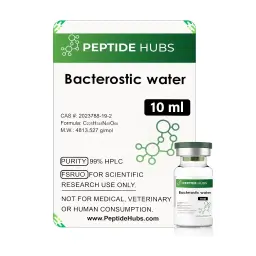
Sterile Diluent
Active Substance: Sterile Water with 0.9% Benzyl Alcohol
Manufacturer: Peptide Hubs
Unit: 10 mL Vial (0.9% Benzyl Alcohol)
Form: Sterile Solution
Laboratory Tested: View Lab Result
USA Domestic: 2-7 Days Delivery
International: 5-20 Days Delivery
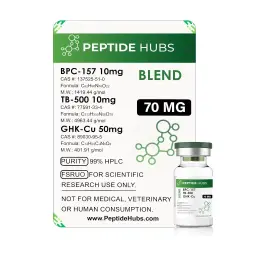
Advanced Healing & Recovery Blend
Active Substances:
- BPC-157 10 mg
- TB-500 10 mg
- GHK-Cu 50 mg
Manufacturer: Peptide Hubs
Unit: 2 mL Vial (70 mg total blend)
Form: Lyophilized Powder
Laboratory Tested: View Lab Result
USA Domestic: 2-7 Days Delivery
International: 5-20 Days Delivery
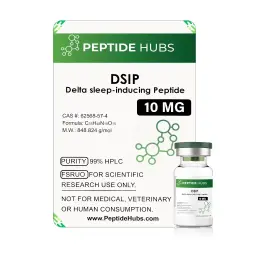
Neuropeptide
Active Substance: DSIP (Delta Sleep-Inducing Peptide)
Manufacturer: Peptide Hubs
Unit: 2 mL Vial (10 mg/vial)
Form: Lyophilized Powder
USA Domestic: 2-7 Days Delivery
International: 5-20 Days Delivery
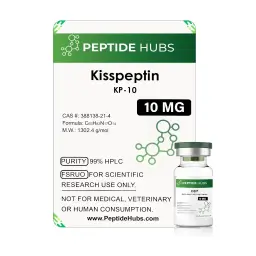
Neuropeptide (GnRH Secretagogue)
Active Substance: Kisspeptin-10
Manufacturer: Peptide Hubs
Unit: 2 mL Vial (10 mg/vial)
Form: Lyophilized Powder
USA Domestic: 2-7 Days Delivery
International: 5-20 Days Delivery
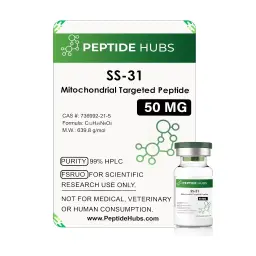
Mitochondrial-Targeted Tetrapeptide
Active Substance: SS-31 (Elamipretide)
Brand: Peptide Hubs
Unit: 2 mL Vial (50 mg/vial)
Form: Lyophilized Powder
USA Domestic: 2-7 Days Delivery
International: 5-20 Days Delivery
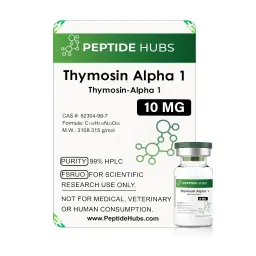
Immunomodulatory Peptide
Active Substance: Thymosin Alpha-1
Brand: Peptide Hubs
Unit: 2 mL Vial (10 mg/vial)
Form: Lyophilized Powder
Laboratory Tested: View Lab Result
USA Domestic: 2-7 Days Delivery
International: 5-20 Days Delivery
