

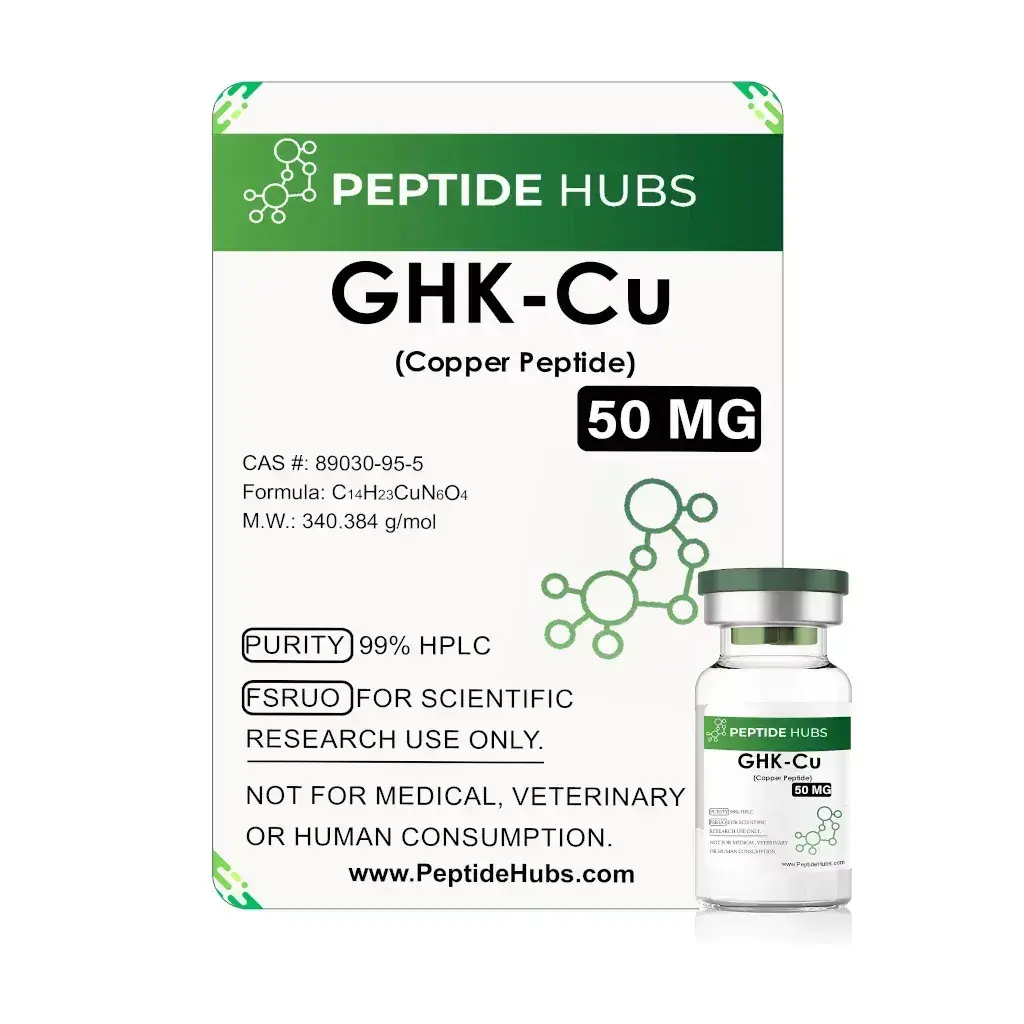
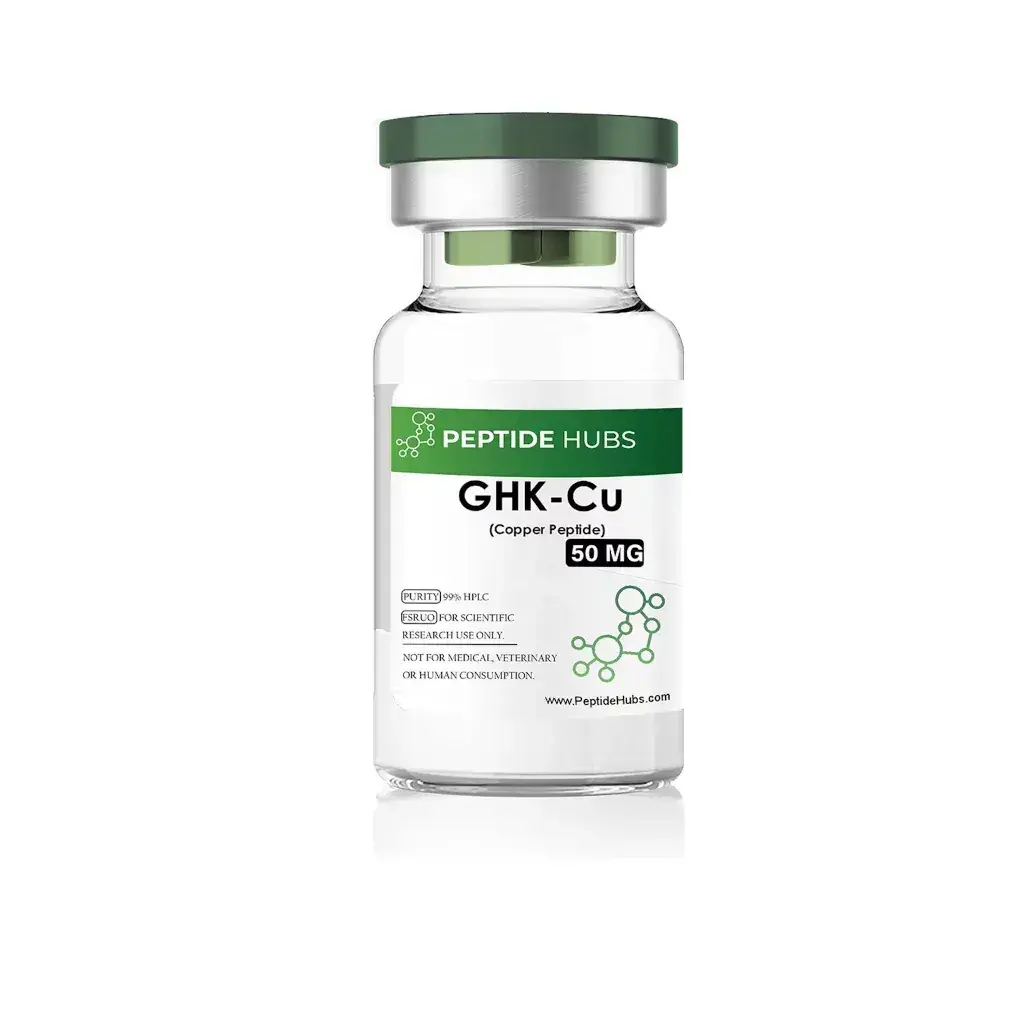
Copper Peptide Complex
Active Substance: GHK-Cu (Glycyl-L-Histidyl-L-Lysine Copper Complex)
Manufacturer: Peptide Hubs
Unit: 2 mL Vial (50 mg/vial)
Form: Lyophilized Powder
Laboratory Tested: View Lab Result
USA Domestic: 2-7 Days Delivery
International: 5-20 Days Delivery
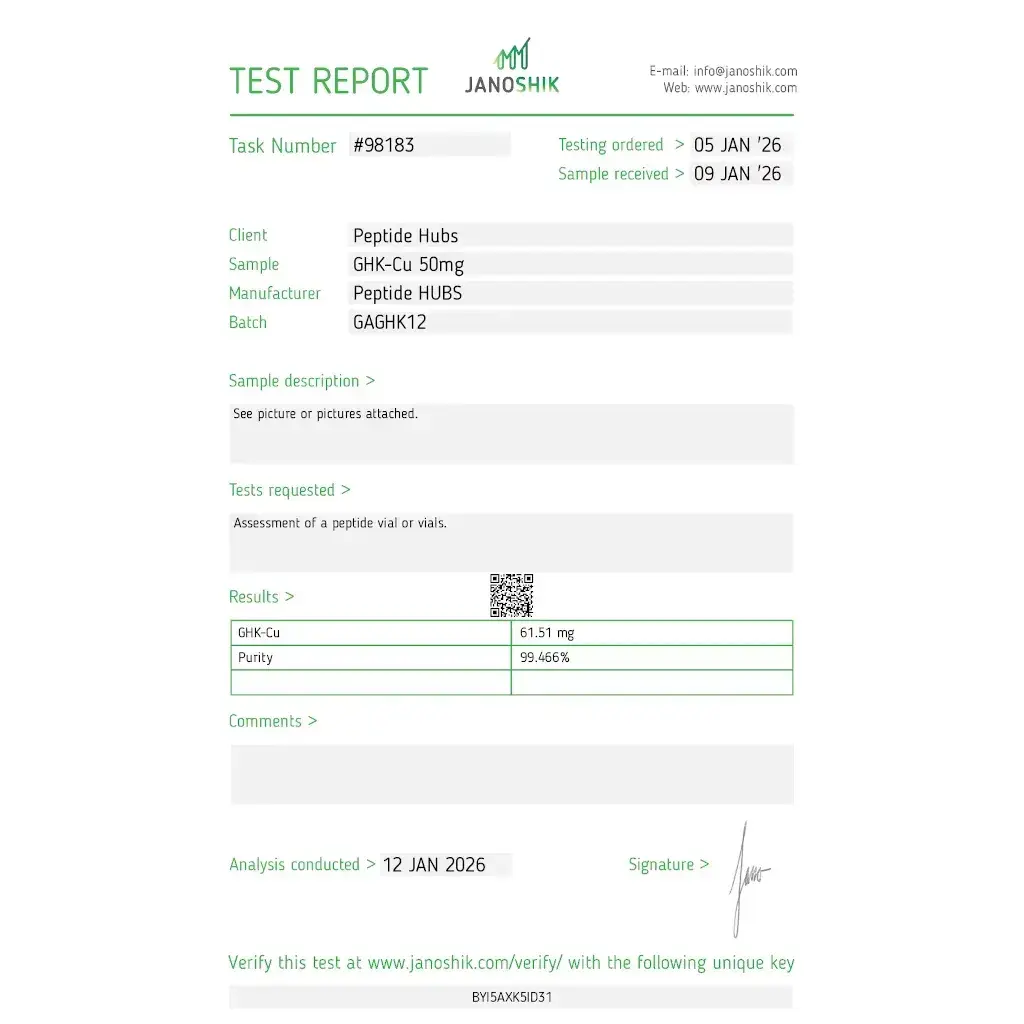
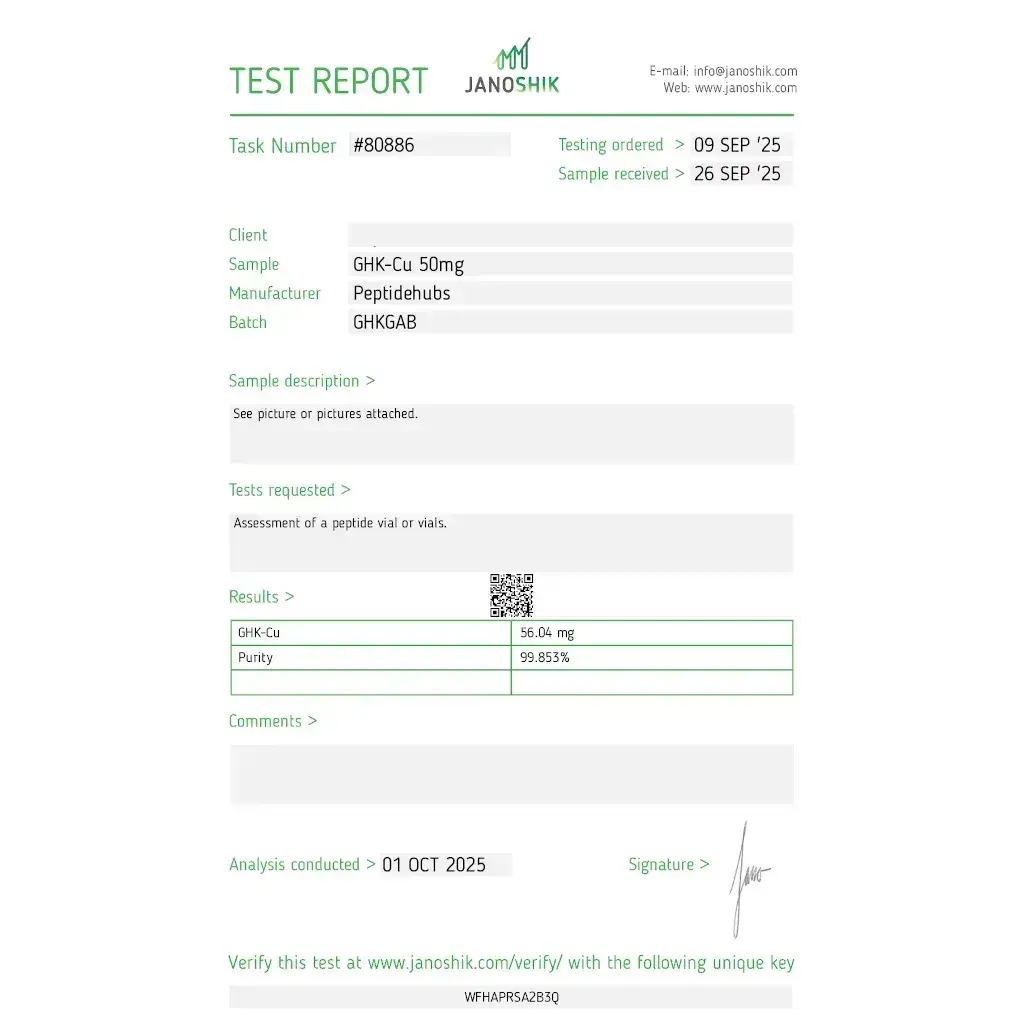
Peptide Hubs presents GHK-Cu 50 mg, a premium lyophilized powder of the tripeptide-copper complex (Glycyl-L-Histidyl-L-Lysine) renowned for its extraordinary reparative and anti-aging properties. This naturally occurring signal peptide, when bound to copper (Cu2+), becomes a powerful modulator of gene expression related to tissue repair, anti-inflammatory responses, and antioxidant defense. With two independent third-party lab tests confirming exceptional purity and overfill—61.51 mg and 56.04 mg per 50 mg vial—researchers receive a high-value, potent compound. For bodybuilders, athletes, and longevity researchers, GHK-Cu offers a multifaceted research tool for investigating enhanced wound healing, collagen synthesis, skin rejuvenation, and systemic anti-inflammatory effects that can support recovery from intense training and promote overall tissue health.
Each sterile 2 mL vial contains 50 mg of the GHK-Cu complex. This consists of the tripeptide Gly-His-Lys (GHK) chelated to a copper (II) ion (Cu2+). The copper is integral to the peptide's biological activity, stabilizing its structure and acting as a cofactor in enzymatic processes. The product is supplied as a distinctive blue-green lyophilized powder, a visual hallmark of the copper complex. It contains no additional fillers and requires reconstitution with bacteriostatic water for research use. The blue color is a positive indicator of proper copper chelation.
GHK-Cu's research applications for athletes extend far beyond cosmetic skin benefits. Its primary investigational benefits include: accelerated healing of minor skin abrasions, cuts, and workout-related irritations; potential support for connective tissue and joint health through increased collagen and glycosaminoglycan synthesis; powerful systemic anti-inflammatory action, which may reduce exercise-induced inflammation and support recovery; antioxidant protection against oxidative stress generated during intense training; and potential improvement in skin barrier function, which can be the body's first line of defense against environmental stressors. For athletes focused on resilience and rapid recovery, GHK-Cu provides a unique model for studying systemic repair mechanisms.
GHK-Cu is a well-studied peptide in dermatology and wound healing research. It functions as a signal peptide that shifts gene expression from a state of degeneration/inflammation to a state of repair/regeneration. According to extensive reviews in resources like the National Institutes of Health (NIH), GHK-Cu promotes wound healing, increases collagen and elastin production, and exhibits anti-inflammatory and antioxidant activities.
GHK-Cu works primarily by binding to DNA and altering the expression of a wide array of genes. It upregulates genes responsible for the synthesis of critical structural proteins like collagen types I, III, and IV, elastin, decorin, and glycosaminoglycans. Simultaneously, it downregulates genes involved in inflammation, such as those for matrix metalloproteinases (MMPs) and inflammatory cytokines (TNF-α, IL-6). The copper ion acts as a catalytic center for antioxidant enzymes like superoxide dismutase (SOD). Essentially, GHK-Cu signals cells to switch from a state of breakdown and inflammation to a state of synthesis and repair.
Research protocols for GHK-Cu vary based on the route of administration and study focus. For systemic/subcutaneous research, common investigative doses range from 1 mg to 2.5 mg per day, administered once daily. For localized skin research, it is often applied topically in solutions ranging from 0.1% to 3% concentration. Subcutaneous cycles are typically 4-8 weeks in length, followed by a break. The blue color of the solution and potential for temporary staining at the injection site are important logistical considerations for research design.
Research dosing for female subjects follows similar subcutaneous (1-2.5 mg daily) or topical protocols. There is no evidence for gender-specific dosing adjustments. GHK-Cu is particularly popular in dermatological research for both sexes. Researchers should note the potential for injection site staining (temporary bruise-like discoloration) and plan accordingly, especially in visible areas.
The exact pharmacokinetic profile of GHK-Cu is not fully detailed, but as a small peptide-copper complex, it likely has a relatively short plasma half-life. However, its effects are mediated through changes in gene expression that can persist for days. The copper ion may also be stored and utilized in various enzymatic processes over time. This allows for once-daily administration in systemic research models.
Research indicates GHK-Cu is very well-tolerated. The most notable, yet harmless, effect is a temporary blue-green discoloration or bruising at the subcutaneous injection site, caused by the copper complex. This fades over days to weeks. Some subjects report mild, transient itching or redness at the injection site. Systemic side effects are rare at research doses. Its excellent safety profile is supported by decades of use in cosmetic and clinical research.
GHK-Cu is contraindicated in research involving subjects with Wilson's disease or other conditions of copper overload or hypersensitivity. Caution is advised in research designs involving subjects with severe kidney or liver impairment. Standard peptide research precautions apply. It is for external and laboratory research use only and not for human consumption.
The primary risk of excessive dosing would be an increase in injection site reactions, including more pronounced staining or irritation. Systemic copper toxicity is highly unlikely at research-level doses, as the amount of copper in even several milligrams of GHK-Cu is minuscule compared to dietary intake. Responsible research adheres to the 1-2.5 mg per day subcutaneous range.
GHK-Cu combines exceptionally well with other peptides that target complementary pathways of repair, growth, and longevity. Potential research stacks include:
These stacks allow for sophisticated research into holistic recovery and rejuvenation.
The product is supplied as one sterile glass vial containing 50 mg of GHK-Cu as a distinctive blue-green lyophilized powder. The vial is sealed with a rubber stopper and aluminum crimp to ensure sterility. The unique color is a key identifier of the authentic copper-peptide complex.
For long-term stability, store the lyophilized powder at or below -20°C (-4°F). For short-term use, refrigeration at 2-8°C (36-46°F) is acceptable. Protect from light, as copper peptides can be photosensitive. After reconstitution, the blue solution should be refrigerated, protected from light, and used within 7-10 days to maintain potency.
The science behind GHK-Cu is robust and well-published in peer-reviewed dermatology, biochemistry, and regenerative medicine journals. Seminal work by Dr. Loren Pickart and others has detailed its discovery, mechanism, and applications. Researchers are encouraged to review this extensive literature, which includes both in-vitro and in-vivo studies, to design methodologically sound research projects that leverage this peptide's unique ability to reprogram gene expression toward repair.
GHK-Cu is a tripeptide (Gly-His-Lys) naturally found in human plasma that is chelated (bound) to a copper ion (Cu2+). The distinctive blue-green color is a direct result of this copper complex. The color is a positive indicator of proper synthesis and chelation. The copper is not an impurity; it's an essential part of the molecule that stabilizes it and is crucial for its biological activity in research models, acting as a cofactor for enzymes involved in repair and antioxidant defense.
Absolutely. Peptide Hubs GHK-Cu is rigorously third-party tested. Two lab reports (Oct 2025 and Jan 2026) show contents of 56.04 mg and 61.51 mg per 50 mg vial—both demonstrating significant overfill and high purity. The confirmed blue color and precise quantification verify this is a legit, high-quality copper peptide complex, essential for reproducible research into its gene-modulating and reparative effects.
For athletic research, GHK-Cu's systemic benefits are significant. It is studied for its potent anti-inflammatory and antioxidant properties, which may help reduce exercise-induced inflammation and oxidative stress, speeding overall recovery. Its ability to upregulate collagen and connective tissue synthesis suggests potential support for joint, tendon, and ligament health. Furthermore, its wound-healing properties can be valuable for minor training-related skin injuries. It represents a research tool for enhancing the body's intrinsic repair systems.
The blue or greenish bruise-like staining at the injection site is caused by the copper component of the peptide complex depositing temporarily in the skin. It is not permanent. It typically fades completely over a period of days to a few weeks as the body slowly metabolizes and clears the copper. To minimize this in research, rotate injection sites frequently and consider subcutaneous administration in less visible areas. The staining is a cosmetic, harmless side effect of the compound's mechanism.
Yes, topical application is a major route of research for GHK-Cu, especially in dermatology studies. After reconstitution, the solution can be mixed into a research-grade serum, cream, or gel carrier. Typical research concentrations range from 0.1% to 3%. Topical research focuses on its effects on collagen production, skin elasticity, wound healing, and reduction of inflammation or scar tissue. It avoids the injection site staining associated with subcutaneous use.
Please log in to write GHK-CU 50 mg review.
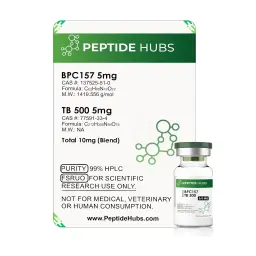
Synergistic Healing Peptide Blend
Active Substances:
- TB-500 (5 mg)
- BPC-157 (5 mg)
Brand: Peptide Hubs
Unit: 2 mL Vial (10 mg total/vial)
Form: Lyophilized Powder
Laboratory Tested: View Lab Result
USA Domestic: 2-7 Days Delivery
International: 5-20 Days Delivery
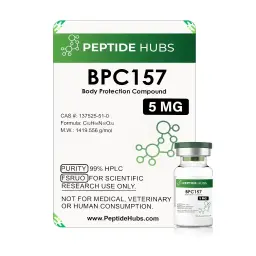
Research Peptide/Healing Peptide
Active Substance: Pentadecapeptide
Manufacturer: Peptide Hubs
Unit: 2 mL Vial (5 mg/vial)
Form: Lyophilized Powder
Laboratory Tested: View Lab Result
USA Domestic: 2-7 Days Delivery
International: 5-20 Days Delivery
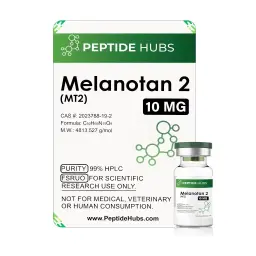
Melanocortin Peptide
Active Substance: Melanotan II
Manufacturer: Peptide Hubs
Unit: 2 mL Vial (10 mg/vial)
Form: Lyophilized Powder
Laboratory Tested: View Lab Result
USA Domestic: 2-7 Days Delivery
International: 5-20 Days Delivery
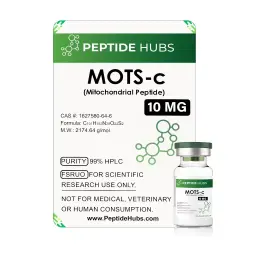
Mitochondrial Peptide
Active Substance: MOTS-c
Manufacturer: Peptide Hubs
Unit: 2 mL Vial (10 mg/vial)
Form: Lyophilized Powder
Laboratory Tested: View Lab Results
USA Domestic: 2-7 Days Delivery
International: 5-20 Days Delivery
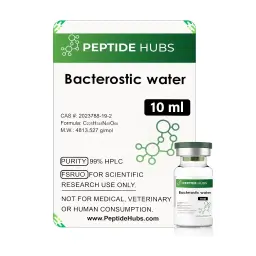
Sterile Diluent
Active Substance: Sterile Water with 0.9% Benzyl Alcohol
Manufacturer: Peptide Hubs
Unit: 10 mL Vial (0.9% Benzyl Alcohol)
Form: Sterile Solution
Laboratory Tested: View Lab Result
USA Domestic: 2-7 Days Delivery
International: 5-20 Days Delivery
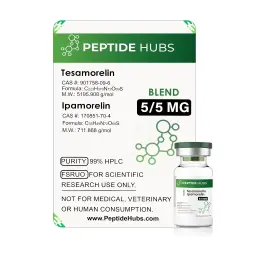
Synergistic GHRH & GHRP Peptide Blend
Active Substances:
- Tesamorelin (5 mg)
- Ipamorelin (5 mg)
Brand: Peptide Hubs
Unit: 2 mL Vial (10 mg total/vial)
Form: Lyophilized Powder
Laboratory Tested: View Lab Result
USA Domestic: 2-7 Days Delivery
International: 5-20 Days Delivery

