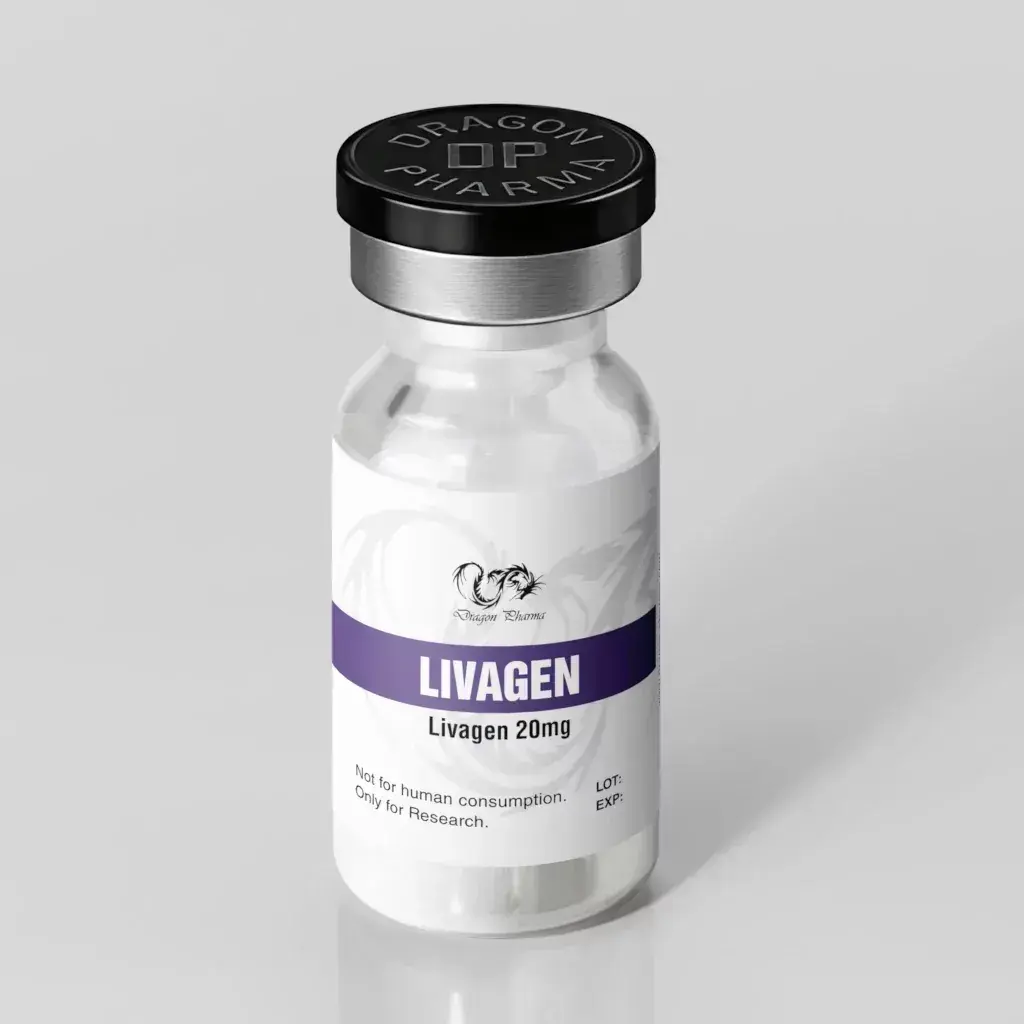
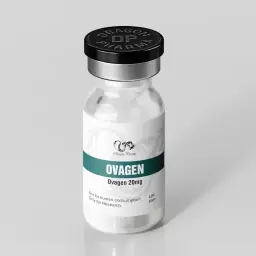
Dragon Pharma Livagen
Livagen is a short-chain peptide researched for its role in cellular regulation, tissue homeostasis, and age-related signaling. It comes from the "peptide bioregulator" school of research, where small peptides are studied for how they may influence nuclear activity and gene expression patterns. Unlike traditional performance compounds that act through hormones or receptors, Livagen is discussed mainly in the context of chromatin structure and cellular "reset" mechanisms. When you Buy Livagen by Dragon Pharma, you're choosing a research peptide designed for studies on epigenetic regulation, immune aging (immunosenescence), and regeneration-focused pathways—delivered with Legit Dragon Pharma quality standards.
Livagen Composition
This 2 mL vial contains 20 mg of high-purity Livagen in lyophilized (freeze-dried) powder form. Livagen is a tetrapeptide with the sequence Lys-Glu-Asp-Ala (often abbreviated as KEDA). In published research, this class of short peptides is discussed for tissue-regulatory properties, with Livagen often referenced in relation to hepatic (liver) and lymphoid (immune) models.
Mechanism of Action: Chromatin Modulation
Livagen is primarily studied for its potential influence on chromatin organization. Research discussions often focus on "decondensation" of tightly packed DNA regions (heterochromatin), which may allow certain genes to become more accessible for transcription. In simple terms: the peptide is explored for how it may help shift cellular gene activity toward a more functional state during stress or aging. This makes Livagen relevant in studies examining age-associated chromatin condensation, ribosomal gene activity, and cell repair signaling.
Bodybuilding & Performance Research Benefits
For athletes and bodybuilders, Livagen is typically viewed through the lens of recovery support and cellular health research. Because the liver and immune system take on extra load during hard training cycles—and especially during protocols that increase metabolic stress—researchers sometimes explore Livagen in hepatoprotective and immune-resilience contexts. Its "nuclear-level" research angle also appeals to those studying longer-term recovery capacity rather than quick, acute injury repair.
Therapeutic Indication
Livagen is referenced in research settings for several areas tied to aging and degeneration, including:
- Atherosclerosis research: explored for links to genomic stability and chromatin patterns observed in vascular conditions.
- Immunosenescence: studied in immune cell models for age-related chromatin changes and immune resilience signaling.
- Hepatic regeneration: discussed in liver tissue models in the context of maintaining structure and supporting regeneration processes.
- Epigenetic research: used as a tool to explore how short peptides may influence chromatin activity and gene access.
Dosage (Men)
As a research compound, protocols vary by model and study goal. Commonly referenced ranges include approximately 100–500 mcg (0.1–0.5 mg) administered subcutaneously per day in short cycles. Because Livagen is discussed as cumulative in effect, cycles are often structured for 10–20 days with a break afterward for assessment. Some research protocols utilize every-other-day administration depending on design.
Dosage (Women)
Female protocols are generally structured more conservatively, often in the range of 50–300 mcg (0.05–0.3 mg) per day depending on the model and tolerance. Starting at the lower end is commonly recommended when setting up a research protocol.
Active Life
As a short tetrapeptide, Livagen is expected to have a short presence in circulation. However, the research interest is less about "how long it stays" and more about downstream effects on gene access and cellular regulation. This is one reason Livagen is commonly structured in cycles rather than continuous administration.
Livagen Side Effects
Available research discussions generally describe Livagen as well-tolerated in the settings where it has been studied. As with any injectable research peptide, minor injection site irritation can occur. No consistent severe adverse effects are commonly emphasized in the published literature.
Livagen Contraindications/Precautionary Measures
Because Livagen is researched for effects tied to chromatin and gene activity, careful study design is recommended—especially in models involving genetic instability or active malignancies. This product is supplied for laboratory research only and is not intended for human consumption. Pregnant or nursing individuals should not handle this compound.
Overdosage
Accidental over-administration may increase the likelihood of mild, short-term effects. There is no specific antidote; supportive monitoring and discontinuation are recommended if unexpected outcomes are observed during a protocol.
Livagen Stack/Cycle
Livagen is often incorporated into broader longevity and regeneration-style research protocols. A classic pairing is Epitalon, which is frequently discussed in the same peptide bioregulator ecosystem. For immune-focused recovery research, stacking Livagen with Thymosin Alpha-1 is common. Researchers also sometimes add NAD+ to support cellular energy demands during regeneration and repair-focused studies. A typical structure referenced is a 20-day cycle followed by a 10-day washout period.
Package Presentation
Dragon Pharma Livagen 20 mg is supplied in a sterile, sealed 2 mL clear glass vial containing a white to off-white lyophilized powder. Each vial is labeled with the product name, strength, batch number, and expiration date for traceability and quality control.
Storage
Store unopened vials in a cool, dry place away from direct sunlight. Refrigeration (2–8°C / 36–46°F) is recommended for long-term stability. After reconstitution with Bacteriostatic Water, store refrigerated and use within 28 days.
Livagen Referrers
For researchers who want to review the published literature behind Livagen's chromatin-focused research framing, the study below is a useful starting point. It discusses ribosomal gene activation and heterochromatin decondensation observed in lymphocyte models. Read the study on PubMed.