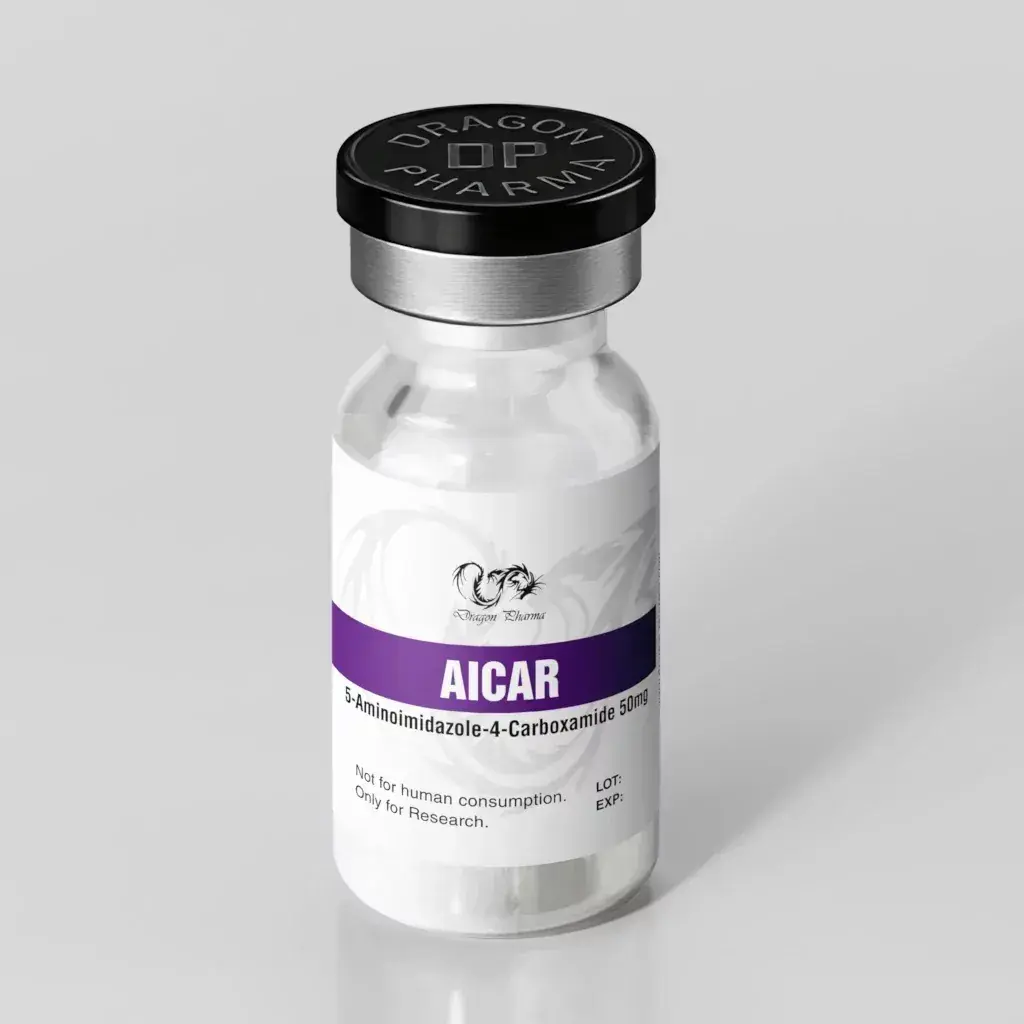
Dragon Pharma AICAR
AICAR is one of the best-known compounds in metabolic and endurance research. It's often described as an "exercise mimetic" because it helps researchers study pathways associated with cellular energy use and endurance adaptation. AICAR (5-Aminoimidazole-4-carboxamide ribonucleotide) was originally explored in medical research contexts, and later became widely referenced due to studies examining endurance-related signaling and metabolism. When you Buy Aicar by Dragon Pharma, you're choosing a research compound designed for AMPK-focused studies, glucose handling research, and mitochondrial signaling—backed by Legit Dragon Pharma quality standards.
AICAR Composition
This 2 mL vial contains 50 mg of high-purity AICAR supplied in a lyophilized (freeze-dried) powder format for stability. AICAR is taken up by cells and converted into ZMP, a compound that mimics AMP activity and can activate AMP-activated protein kinase (AMPK). Because AMPK is a central "energy sensor" in the body, AICAR is frequently used in research models that focus on energy balance, substrate utilization, and cellular metabolism.
Bodybuilding & Performance Research Benefits
From a physique and performance perspective, AICAR is most commonly discussed for its role in AMPK activation. AMPK signaling is tied to glucose uptake and fatty acid oxidation, which makes AICAR relevant to studies on nutrient partitioning and metabolic flexibility—especially during cutting or endurance-focused phases. Researchers also explore AICAR's effect on mitochondrial biogenesis pathways, which can influence oxidative capacity and endurance markers over time.
Therapeutic Research Background
In clinical and laboratory settings, AICAR has been investigated for several metabolic research areas. Because AMPK plays an important role in insulin sensitivity and energy regulation, AICAR is used in research models exploring Type 2 diabetes mechanisms, metabolic syndrome pathways, and fatty acid oxidation signaling. It has also been studied in cardiometabolic research, including models related to ischemic stress and energy preservation.
Mechanism of Action: AMPK Activation
AICAR's primary mechanism is associated with AMPK activation. When AMPK is activated, cells shift away from energy storage pathways and toward energy-producing pathways—supporting glucose uptake and fatty acid oxidation. AICAR is studied because it can initiate parts of this signaling cascade without requiring a true energy deficit, making it a useful tool for investigating the molecular "switches" linked to endurance-style adaptations.
Dosage (Men)
In research settings, protocols vary depending on the study design and endpoints being measured. Some protocols referenced in research discussions include daily administration in the range of 10–50 mg, often timed around activity windows when endurance and substrate utilization are being observed. Many studies are structured in multi-week blocks (commonly 4–8 weeks) followed by an off period to assess adaptations. For any protocol decisions, conservative dosing and appropriate monitoring are essential.
Dosage (Women)
Female research protocols are typically structured conservatively, often using lower daily ranges such as 10–25 mg depending on the model and study goals. As with men, timing and duration depend on what the research is measuring, and starting at the lower end is commonly recommended for tolerance assessment.
Active Life
AICAR has a relatively short plasma half-life (commonly referenced around 2–3 hours). However, the downstream effects of AMPK signaling—such as changes in glucose transport activity and gene expression related to mitochondrial proteins—may persist beyond the clearance window, influencing metabolic markers for longer periods.
AICAR Side Effects
In research models, AICAR is often described as generally tolerable, though observations can include transient flushing, mild nausea, dizziness, or injection site irritation. Some studies have raised concerns at higher doses in sedentary models, including cardiac-related changes, which highlights the importance of dose selection and appropriate context within research protocols.
AICAR Contraindications/Precautionary Measures
AICAR should be used with caution in research models involving cardiac abnormalities or glucose instability, as AMPK signaling can influence both cardiac remodeling pathways and glucose utilization. This product is supplied for laboratory research only and is not intended for human consumption. Pregnant or nursing individuals should avoid handling this compound.
Overdosage
Accidental over-administration may increase the likelihood of pronounced nausea, dizziness, glucose-related symptoms, and potential cardiovascular stress depending on the model. There is no specific antidote. Discontinuation and supportive monitoring are generally recommended in research settings.
AICAR Stack/Cycle
AICAR is often paired with other compounds in metabolic and endurance research to explore complementary pathways. A well-known pairing is AICAR with GW501516 (Cardarine), which targets PPARδ signaling and fatty acid utilization. To support fatty acid transport research, some protocols also include L-Carnitine 500. For comparative "exercise mimetic" pathway research, AICAR may be evaluated alongside SLU-PP-332 to compare different metabolic signaling mechanisms. Typical study blocks are often structured around 4–6 weeks depending on endpoints.
Package Presentation
Dragon Pharma AICAR 50 mg is supplied in a sterile, sealed 2 mL clear glass vial containing a white to off-white lyophilized powder. Each vial is labeled with the product name, strength, batch number, and expiration date for traceability and quality control.
Storage
Store unopened vials in a cool, dry place away from direct sunlight. Refrigeration (2–8°C / 36–46°F) is recommended for long-term stability. After reconstitution with Bacteriostatic Water, store refrigerated and use within 28 days to maintain stability.
AICAR Referrers
For researchers who want to review primary literature, the best starting point is the landmark study often cited in discussions around endurance-style metabolic signaling and AICAR's "exercise mimetic" framing. Read the seminal AICAR study on PubMed.