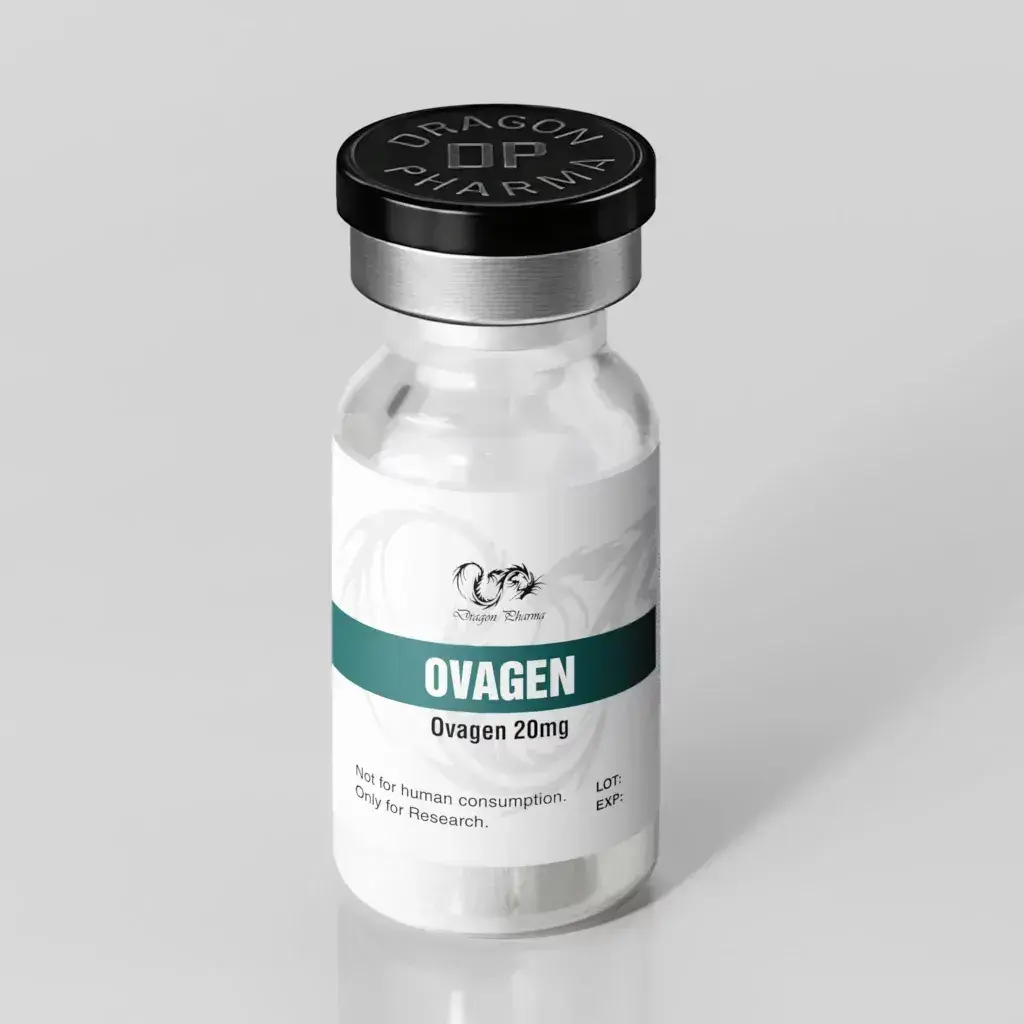
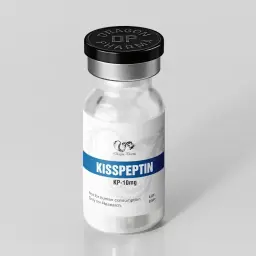
Dragon Pharma Ovagen
Ovagen is a tissue-specific peptide bioregulator belonging to the cytomedin class of compounds developed within advanced peptide research programs. Derived from bovine ovarian tissue, Ovagen has been studied for its role in supporting ovarian cellular function, follicular integrity, and reproductive system homeostasis. Unlike broad-spectrum regenerative peptides, Ovagen is designed to act selectively on ovarian tissue, making it a focused research tool for reproductive endocrinology and organ-specific peptide signaling. When you Buy Ovagen by Dragon Pharma, you are obtaining a research-grade peptide intended for controlled laboratory investigation.
Ovagen Composition
This 2 mL vial contains 20 mg of lyophilized Ovagen. The compound consists of a peptide complex derived from ovarian tissue, including short peptide fragments and amino acid sequences believed to exert tissue-specific regulatory effects. Ovagen is classified as a cytomedin—peptides theorized to influence gene expression and cellular signaling within their target organ by interacting with local receptors and nuclear regulatory pathways.
Mechanism of Action: Tissue-Specific Bioregulation
Ovagen is studied under the cytomedin framework, which proposes that organ-derived peptide complexes carry regulatory signals capable of restoring or supporting function in corresponding tissues. Proposed mechanisms include:
- Targeted receptor interaction: Peptide fragments may bind to ovarian cell receptors, including those on granulosa and theca cells.
- Gene expression support: Similar cytomedins have been shown to influence chromatin structure and transcriptional activity related to cellular repair.
- Follicular maintenance: Ovagen is investigated for its potential role in preserving follicular viability and ovarian microenvironment stability.
- Endocrine feedback support: By supporting ovarian tissue health, Ovagen may indirectly influence hypothalamic-pituitary-ovarian axis signaling.
Relevance to Female Athletes & Bodybuilders
Female athletes engaged in high-intensity training or prolonged caloric restriction may experience suppression of reproductive function due to metabolic stress, commonly associated with Relative Energy Deficiency in Sport (RED-S). Ovagen offers a focused research model for studying ovarian-level support during periods of endocrine strain.
Research applications include investigation into:
- Follicular health under energy-restricted conditions
- Granulosa cell activity during high training load
- Estrogen production dynamics in athletic populations
- Recovery of reproductive signaling following training-induced suppression
Therapeutic Indication
Ovagen has been explored in research contexts related to:
- Ovarian aging: Studied for maintaining follicular and cellular integrity in aging models.
- Menstrual irregularities: Investigated in conditions involving disrupted ovarian signaling.
- Assisted reproduction research: Evaluated for potential effects on oocyte quality and ovarian environment.
- Menopausal transition: Examined in studies of declining ovarian function.
- Tissue-specific regeneration: Used as a model compound for organ-targeted peptide signaling.
Dosage (Women)
Research protocols commonly utilize 50–200 mcg per day administered subcutaneously. Ovagen is typically studied in short cycles lasting 10–20 days, often coordinated with specific phases of reproductive signaling. Some models employ alternate-day dosing to reflect physiological rhythms.
Dosage (Men)
Although primarily studied in female models, Ovagen has also been explored in male research contexts due to shared endocrine signaling pathways. Typical experimental dosing ranges from 50–150 mcg per day. Lower starting doses are recommended.
Active Life
Ovagen peptides exhibit a short circulating half-life; however, their biological effects—particularly those involving gene expression and cellular regulation—may persist beyond measurable plasma presence. This supports cyclical rather than continuous research protocols.
Ovagen Side Effects
Ovagen is generally well tolerated in research settings. Reported effects are minimal and may include mild, localized injection-site reactions. No significant systemic adverse effects have been consistently documented.
Ovagen Contraindications / Precautionary Measures
Ovagen should be used cautiously in research models involving hormone-sensitive conditions. Due to its ovarian-specific activity, careful protocol design and monitoring are advised. This compound is for laboratory research only and is not intended for human consumption.
Overdosage
Excess dosing may increase the likelihood of transient reactions. No specific antidote exists; supportive observation is recommended.
Ovagen Stack / Cycle
Ovagen may be combined with complementary research compounds depending on study goals. Common combinations include HCG 5000 IU for luteal-phase signaling research, Kisspeptin for hypothalamic regulation studies, and MOTS-c to explore interactions between metabolic status and reproductive signaling.
Package Presentation
Ovagen 20 mg is supplied in a sterile, sealed 2 mL glass vial containing lyophilized powder. Each vial is labeled with product identification, batch number, and expiration date.
Storage
Store lyophilized Ovagen in a cool, dry place away from light. Refrigeration is recommended for long-term storage. After reconstitution, refrigerate and use within 28 days.
Ovagen Referrers
Ovagen is referenced in peptide research literature as a tissue-specific bioregulator used for investigating ovarian and reproductive cellular signaling pathways under controlled laboratory conditions.