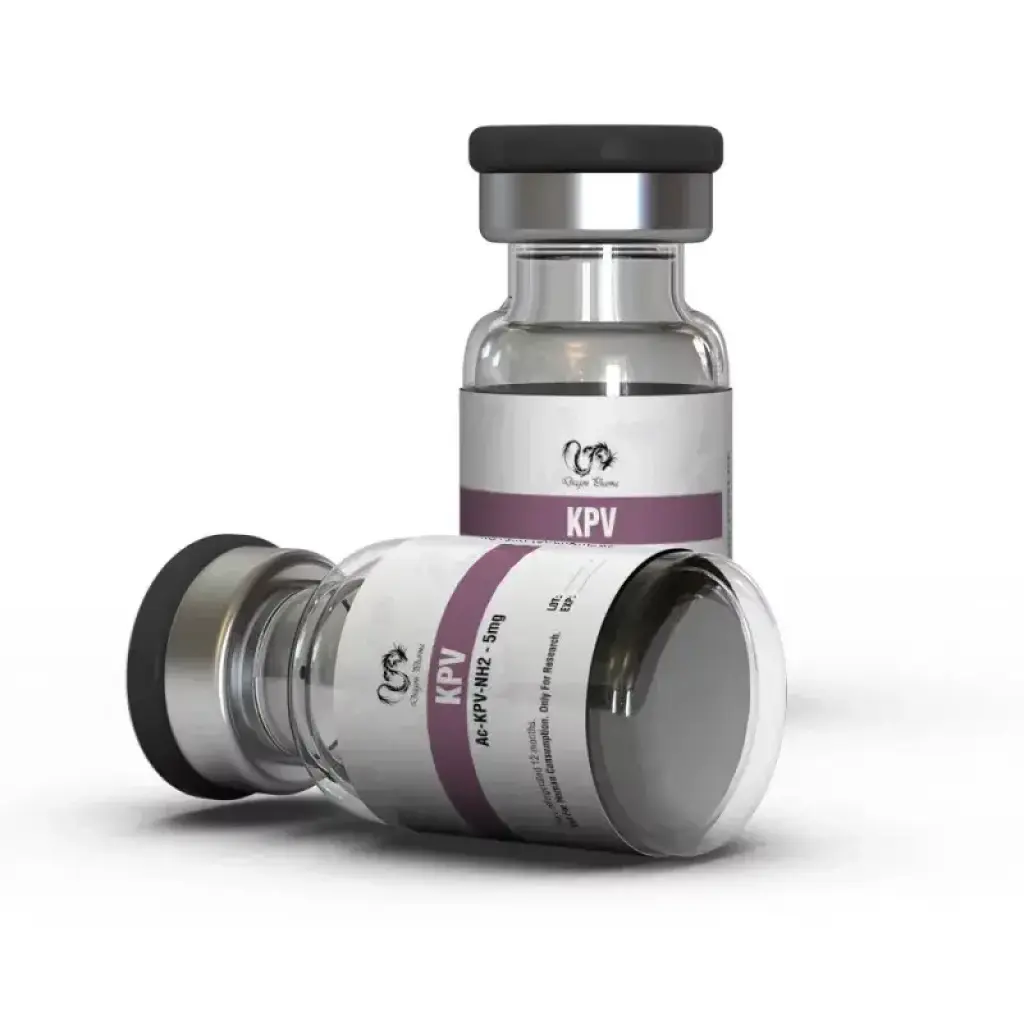
Dragon Pharma KPV 5 mg
KPV (Ac-KPV-NH2) represents a significant advancement in research peptides targeting inflammatory regulation and tissue recovery. As a synthetic tripeptide fragment derived from the C-terminal sequence of alpha-melanocyte-stimulating hormone (α-MSH), KPV has demonstrated remarkable potential in experimental models for modulating immune responses and supporting epithelial integrity. Dragon Pharma's commitment to purity and precision is evident in this 5 mg lyophilized powder formulation, providing researchers with a reliable tool for investigating cytokine balance and stress response pathways. For athletes and bodybuilders exploring recovery optimization, KPV offers a novel approach to managing exercise-induced inflammation, potentially accelerating the return to peak training conditions.
KPV Composition
Each 2 mL vial contains 5 mg of highly purified Acetyl-Lysine-Proline-Valine-NH2 (Ac-KPV-NH2) in lyophilized powder form. The product undergoes rigorous HPLC testing to ensure >98% purity, with no preservatives or fillers. The lyophilization process enhances stability and shelf life, allowing for precise reconstitution with bacteriostatic water or sterile saline. Dragon Pharma's manufacturing follows strict GMP guidelines, ensuring batch-to-batch consistency and reliable dosing for research purposes.
Bodybuilding Benefits
For strength athletes and bodybuilders, managing inflammation is crucial for consistent progress. Intense training creates microtrauma in muscle tissue, triggering inflammatory cascades that, while necessary for adaptation, can impede recovery when excessive. KPV's mechanism of action, involving melanocortin receptor activation and NF-κB pathway modulation, may help regulate this inflammatory response more efficiently. Research suggests this tripeptide fragment could support faster recovery between sessions, reduce training-related joint discomfort, and potentially enhance gut barrier function—a common concern with extreme nutritional protocols. By promoting a more balanced immune environment, KPV may help athletes maintain training frequency and volume, key drivers of hypertrophy and strength gains.
Therapeutic Indication
In preclinical research, KPV has shown promise in models of inflammatory bowel disease, dermatitis, and other immune-mediated conditions. Its ability to inhibit NF-κB signaling—a central pathway in inflammation—makes it a subject of interest for conditions characterized by excessive cytokine production. Studies, including those published in authoritative journals like The Journal of Investigative Dermatology, have documented its effects on epithelial repair and immune modulation. Researchers are particularly interested in its topical and systemic applications for maintaining mucosal barrier integrity during physiological stress.
Dosage (Men)
Research protocols typically utilize KPV at doses ranging from 50-200 mcg per kilogram of body weight in animal models. For human research extrapolation, conservative starting points often range from 100-500 mcg daily, administered subcutaneously or topically depending on the study design. Some protocols divide dosing into twice-daily administration to maintain stable concentrations. Given its potent anti-inflammatory effects, researchers should titrate carefully while monitoring response markers. Dragon Pharma recommends consulting current scientific literature to determine appropriate dosing for specific experimental parameters.
Dosage (Women)
Female research subjects typically follow similar weight-based protocols, though some studies suggest slightly lower dose requirements due to differences in body composition and metabolic rates. Typical research doses range from 80-400 mcg daily, with careful attention to individual response. As with all research compounds, baseline measurements and regular monitoring are essential components of responsible investigation.
Active Life
KPV has a relatively short plasma half-life of approximately 30-45 minutes, necessitating frequent administration or sustained-release delivery systems in research settings. Despite its brief circulation time, its biological effects on inflammatory pathways may persist for several hours due to downstream modulation of gene expression and protein synthesis. This discrepancy between pharmacokinetics and pharmacodynamics is a key area of ongoing investigation.
KPV Side Effects
In research models, KPV has demonstrated an excellent safety profile with minimal reported adverse effects at therapeutic doses. Some studies note transient flushing or mild itching at injection sites with subcutaneous administration. Unlike glucocorticoids or NSAIDs, KPV appears to modulate rather than suppress immune function, potentially reducing risks of immunosuppression or gastrointestinal complications. However, as with any research compound, comprehensive safety data in human subjects remains limited, necessitating cautious investigation.
KPV Contraindications/Precautionary Measures
Research should be avoided in subjects with known hypersensitivity to peptide compounds or components of the diluent. Caution is warranted in models involving immunosuppressed subjects, as immune modulation could theoretically affect host defense mechanisms. KPV should not be combined with other potent anti-inflammatory agents without careful experimental design. Researchers should verify sterility during reconstitution and use promptly or refrigerate according to storage guidelines. Dragon Pharma products are for laboratory research only and not for human consumption.
Overdosage
Limited data exists regarding KPV overdose scenarios. In excessive doses, researchers might observe enhanced anti-inflammatory effects potentially masking infection or injury. Standard emergency protocols should be established for all research involving bioactive compounds. Researchers should maintain detailed records of dosing, administration times, and subject responses throughout experimental procedures.
KPV Stack/Cycle
KPV is frequently incorporated into research stacks focusing on recovery and tissue repair. Common research combinations include:
- With BPC 157: For comprehensive gastrointestinal and joint health studies, KPV's anti-inflammatory properties complement BPC 157's angiogenic and ulcer-healing effects.
- With TB 500: Combining KPV with TB 500 (Thymosin Beta-4) creates a potent research protocol for wound healing and tissue regeneration models.
- With GHK-cu: For skin and connective tissue research, KPV pairs effectively with GHK-cu to modulate inflammation while promoting collagen synthesis.
- With Ipamorelin: In recovery studies, KPV's inflammation management combined with Ipamorelin's growth hormone stimulation may optimize anabolic environments.
- With DSIP: For stress and sleep research, KPV alongside DSIP (Delta Sleep-Inducing Peptide) may address both inflammatory and neuroendocrine aspects of recovery.
Research cycles typically last 4-8 weeks, followed by observation periods to assess lasting effects. Stacking should be approached systematically, introducing one compound at a time to evaluate individual contributions.
Package Presentation
Each order includes one sterile 2 mL glass vial containing 5 mg of lyophilized KPV powder under vacuum seal. The vial is capped with a bromobutyl rubber stopper and sealed with an aluminum flip-off cap for contamination-free access. Vials are packaged individually in blister packs with desiccant to maintain stability during shipping and storage.
Storage
Unreconstituted vials should be stored at 2-8°C (36-46°F) protected from light. Under these conditions, the lyophilized powder remains stable for 24 months from manufacture date. Once reconstituted with bacteriostatic water, the solution should be refrigerated and used within 14-21 days to ensure potency and sterility. Avoid freezing reconstituted solutions as crystal formation may affect peptide integrity.
KPV Referrers
The scientific foundation for KPV research originates from studies on α-MSH and its fragments. Research published in PLOS ONE has documented the tripeptide's effects on inflammatory markers and intestinal barrier function. Additional references include studies on melanocortin receptors and their role in immune regulation, particularly MC1R which appears central to KPV's activity. These authoritative sources provide context for designing rigorous research protocols with this promising peptide compound.