

Selective Growth Hormone Releasing Peptide
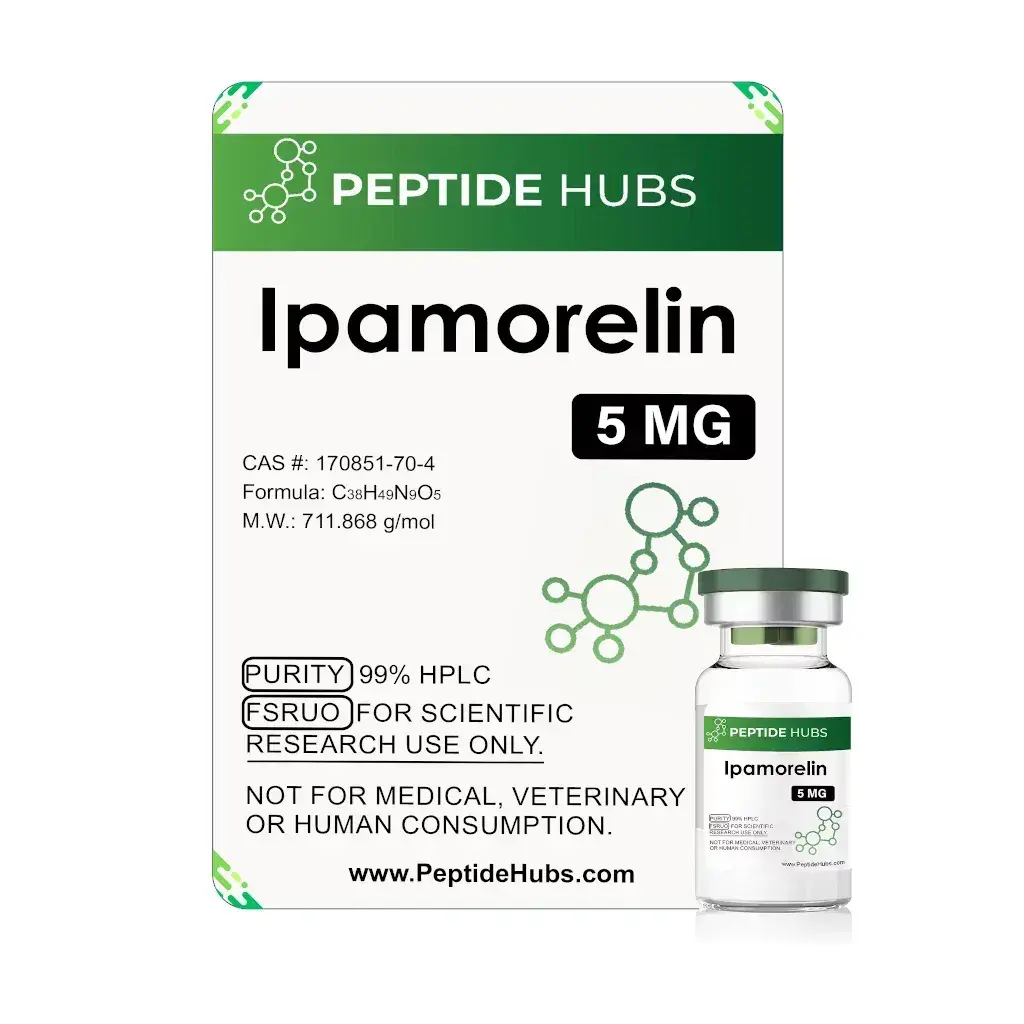
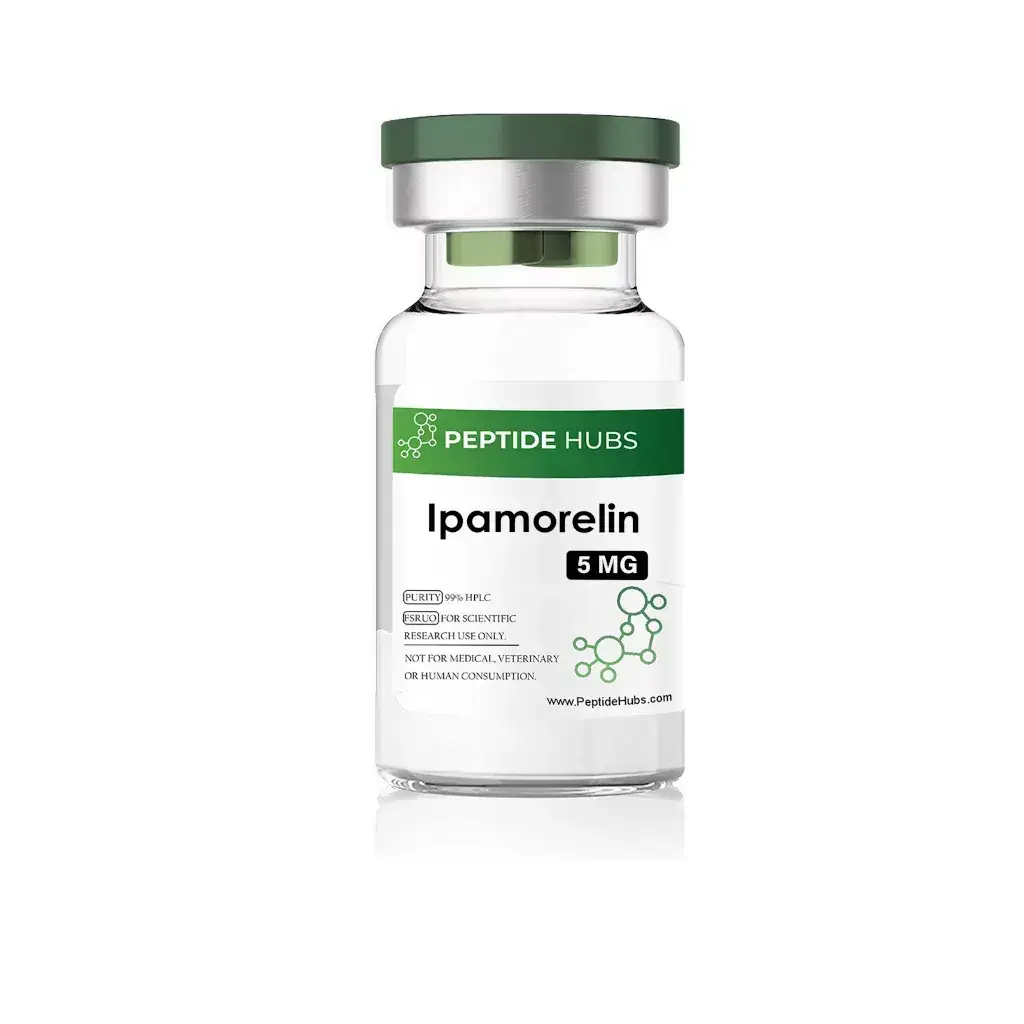
Active Substance: Ipamorelin
Manufacturer: Peptide Hubs
Unit: 2 mL Vial (5 mg/vial)
Form: Lyophilized Powder
Laboratory Tested: View Lab Result
USA Domestic: 2-7 Days Delivery
International: 5-20 Days Delivery
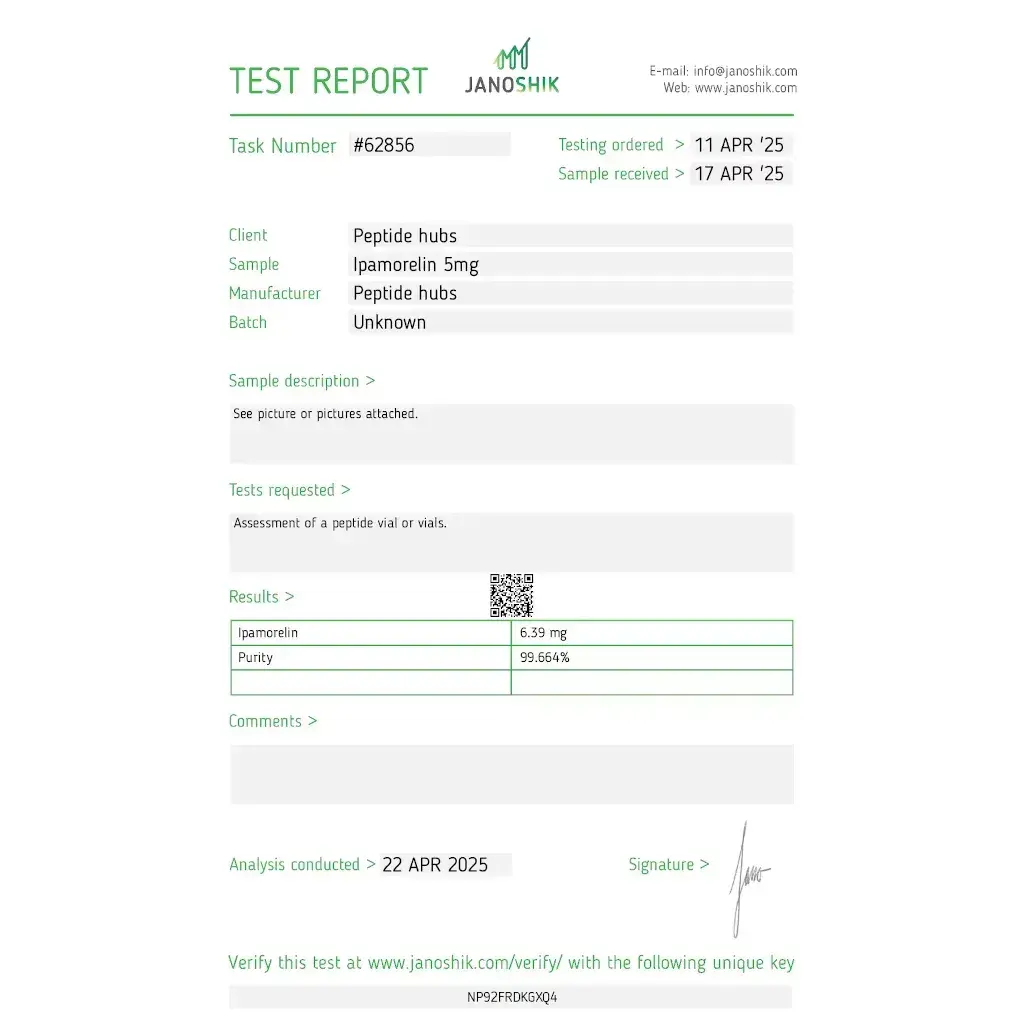
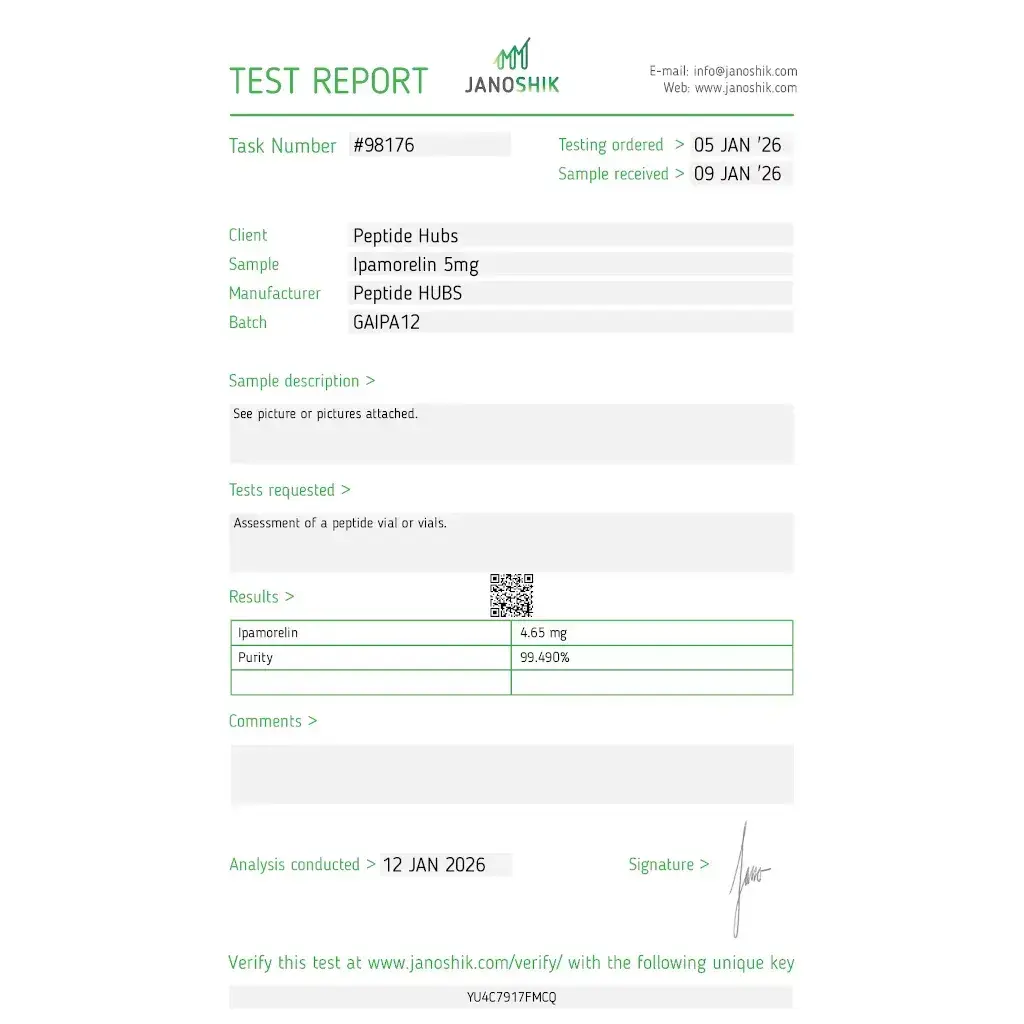
Ipamorelin is a premium selective Growth Hormone Releasing Peptide (GHRP) presented as a 5 mg lyophilized powder. Representing the third generation of GHRP technology, Ipamorelin is distinguished by its "clean" pharmacological profile—it potently stimulates endogenous growth hormone (GH) secretion without the significant increases in hunger, cortisol, or prolactin associated with earlier GHRPs like GHRP-6 and GHRP-2. With two independent third-party lab tests confirming precise potencies of 4.65 mg and 6.39 mg per vial, researchers receive a consistently high-quality product. For bodybuilders, athletes, and researchers focused on body recomposition and recovery, Ipamorelin offers the ideal model for investigating the benefits of pulsatile GH elevation (fat loss, muscle growth, recovery) while minimizing confounding variables like appetite stimulation and stress hormone disruption, making it suitable for both cutting and lean mass research protocols.
Each sterile 2 mL vial contains 5 mg of synthetic Ipamorelin with the sequence: Aib-His-D-2-Nal-D-Phe-Lys-NH2. This pentapeptide features an aminoisobutyric acid (Aib) at the N-terminus and D-amino acids at positions 2 and 4, which confer exceptional metabolic stability and receptor selectivity. The product is supplied as a pure, white lyophilized powder without excipients, requiring reconstitution with bacteriostatic water before use. Its engineered structure is key to its selective action on the ghrelin receptor.
Ipamorelin's research value lies in its ability to provide a potent yet "clean" GH stimulus. Key investigational benefits include: reliable stimulation of pulsatile GH release, leading to increased IGF-1 levels that support protein synthesis and lean muscle accrual; enhanced lipolysis and fat oxidation, contributing to improved body composition without stimulating appetite—a critical advantage for fat-loss research; accelerated recovery from training through GH-mediated repair of muscle and connective tissues; minimal disruption of the endocrine balance, avoiding the cortisol and prolactin spikes that can interfere with recovery and well-being; and suitability for long-term research cycles due to lower risk of desensitization compared to more potent GHRPs. For studies where appetite control and metabolic precision are priorities, Ipamorelin is the GHRP of choice.
Ipamorelin has been studied in clinical contexts for diagnosing growth hormone deficiency and for its potential in age-related GH decline. As a selective ghrelin receptor (GHS-R1a) agonist, it triggers GH release with high specificity. According to pharmacological characterizations referenced by the National Institutes of Health (NIH), Ipamorelin demonstrates a unique ability to stimulate GH without affecting ACTH (and thus cortisol) or prolactin secretion.
Ipamorelin binds with high affinity and selectivity to the Growth Hormone Secretagogue Receptor type 1a (GHS-R1a) on pituitary somatotroph cells. This binding activates the inositol phosphate pathway, leading to calcium mobilization and the release of stored growth hormone. Crucially, its chemical structure allows it to activate this pathway without significantly cross-activating the receptors or neural circuits that control appetite (hunger), stress response (cortisol via ACTH), or lactation (prolactin). This selective action is why it's described as a "clean" GHRP. It provides the GH-releasing trigger while leaving other hormonal axes largely undisturbed.
Research protocols for Ipamorelin typically involve multiple daily doses to mimic natural GH pulses. Common investigative doses range from 100 mcg to 300 mcg per administration, administered via subcutaneous injection. It is often used 2-3 times daily: upon waking in a fasted state, post-workout, and 30-60 minutes before bedtime to amplify the nocturnal GH surge. When stacked with a GHRH analog like CJC-1295 No DAC, doses are usually matched (e.g., 100-200 mcg of each). Research cycles can extend 8-16 weeks or longer due to its favorable safety and desensitization profile.
Research dosing for female subjects follows the same microgram protocols, often starting at the lower end (e.g., 100 mcg per dose). Ipamorelin's lack of significant prolactin stimulation makes it particularly suitable for female research subjects. Its minimal effect on appetite is also advantageous for studies focused on body composition. As always, research should be designed with careful observation.
Ipamorelin has a plasma half-life of approximately 2 hours, which is longer than GHRP-6 and GHRP-2 due to its Aib and D-amino acid modifications. The resulting GH pulse elevates levels for several hours. This extended half-life supports a research dosing schedule of 2-3 times per day and may contribute to a smoother, more sustained GH elevation compared to the sharper spikes of shorter-lived GHRPs.
Research indicates an excellent side effect profile. The most common observations are mild and transient: a slight feeling of warmth or flushing associated with the GH pulse, which subsides quickly. Critically, significant hunger stimulation, cortisol elevation, or prolactin increase are not characteristic of Ipamorelin at standard research doses. This is its defining feature. Injection site reactions are rare. Its clean profile supports its use in long-term and sensitive research populations.
Ipamorelin is contraindicated in research involving subjects with active or suspected malignancies. Caution is advised in studies with diabetic subjects due to GH's anti-insulin effects, though the risk is lower with pulsatile vs. continuous GH elevation. It should not be used in subjects with known hypersensitivity. Standard peptide research precautions apply. Ipamorelin is for laboratory research use only.
The risks are low but could include increased incidence of mild flushing or headache. Even at higher doses, Ipamorelin maintains its selectivity, so significant hunger or cortisol/prolactin spikes are unlikely. However, exceeding research doses is wasteful and unnecessary. Adherence to the 100-300 mcg per dose range is recommended for studying its selective effects.
Ipamorelin is most powerfully and commonly researched in synergy with a GHRH analog. It also combines well with other compounds for targeted outcomes.
The product is supplied as one sterile glass vial containing 5 mg of Ipamorelin as a white lyophilized powder. The vial is sealed with a rubber stopper and aluminum crimp to ensure sterility. Packaging is discreet and secure.
For long-term stability, store the lyophilized powder at or below -20°C (-4°F). For short-term use during an active research cycle, refrigeration at 2-8°C (36-46°F) is sufficient. After reconstitution with bacteriostatic water, the solution must be refrigerated and used within 7-10 days to maintain peptide potency.
The development of Ipamorelin as a selective GHRP is a significant milestone in peptide pharmacology. Key references include the original patent and characterization studies that highlight its unique endocrine profile. Researchers should also review comparative studies that pit Ipamorelin against GHRP-6 and GHRP-2, clearly demonstrating its advantages in terms of side effect profile and its implications for long-term research on the GH axis without confounding hormonal disturbances.
Ipamorelin is called "selective" because it potently stimulates growth hormone (GH) release via the ghrelin receptor but has minimal to no effect on other hormonal pathways. Unlike GHRP-6 and GHRP-2, it does not significantly increase appetite (hunger), cortisol (the stress hormone), or prolactin. This clean profile is due to its unique chemical structure (Aib-His-D-2-Nal-D-Phe-Lys-NH2), which allows it to activate the desired GH release trigger while avoiding off-target effects, making it ideal for research where these variables need to be controlled.
Yes. Peptide Hubs Ipamorelin is verified by two independent third-party lab tests (April 2025 and January 2026), showing contents of 6.39 mg and 4.65 mg per 5 mg vial. These results confirm both high purity and accurate dosing, with batch-to-batch consistency. This level of testing ensures researchers receive a reliable and potent selective GHRP for their studies.
Ipamorelin is preferred for fat loss research because it stimulates GH release—which promotes lipolysis (fat breakdown)—without increasing hunger. Other GHRPs like GHRP-6 cause intense hunger, which can lead to increased calorie intake and sabotage a calorie deficit. By providing the metabolic benefits of elevated GH (fat burning, muscle preservation) without the appetite side effect, Ipamorelin allows researchers to study body recomposition in a more controlled setting.
The most common research protocol involves 2-3 subcutaneous injections daily, typically upon waking (fasted), post-workout, and 30-60 minutes before bedtime. The pre-bed dose is particularly important to amplify the body's natural nocturnal GH surge. Doses usually range from 100-300 mcg per injection. When stacked with CJC-1295 No DAC, doses are often matched (e.g., 200 mcg of each). This schedule mimics natural pulsatile GH secretion.
Yes, Ipamorelin is known for having a lower risk of causing pituitary desensitization (tachyphylaxis) compared to more potent GHRPs like Hexarelin. Its selective action and moderate potency allow for longer research cycles (e.g., 12-16 weeks) without a dramatic loss of effect. This makes it suitable for longitudinal studies on body composition, recovery, or age-related GH decline where sustained GH stimulation is desired.
Please log in to write Ipamorelin 5 mg review.
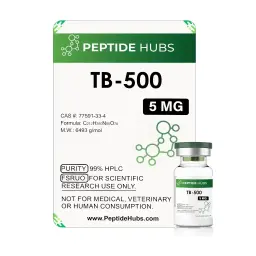
Reparative & Regenerative Peptide
Active Substance: Thymosin Beta 4
Brand: Peptide Hubs
Unit: 2 mL Vial (5 mg/vial)
Form: Lyophilized Powder
Laboratory Tested: View Lab Result
USA Domestic: 2-7 Days Delivery
International: 5-20 Days Delivery
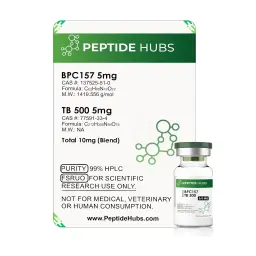
Synergistic Healing Peptide Blend
Active Substances:
- TB-500 (5 mg)
- BPC-157 (5 mg)
Brand: Peptide Hubs
Unit: 2 mL Vial (10 mg total/vial)
Form: Lyophilized Powder
Laboratory Tested: View Lab Result
USA Domestic: 2-7 Days Delivery
International: 5-20 Days Delivery
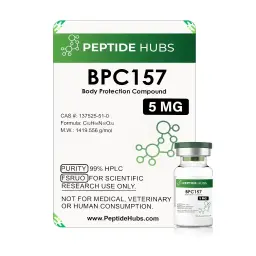
Research Peptide/Healing Peptide
Active Substance: Pentadecapeptide
Manufacturer: Peptide Hubs
Unit: 2 mL Vial (5 mg/vial)
Form: Lyophilized Powder
Laboratory Tested: View Lab Result
USA Domestic: 2-7 Days Delivery
International: 5-20 Days Delivery
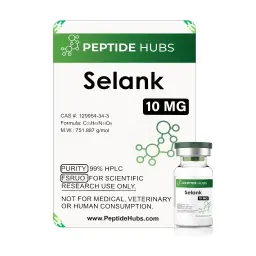
Nootropic/Anxiolytic Peptide
Active Substance: Selank
Brand: Peptide Hubs
Unit: 2 mL Vial (10 mg/vial)
Form: Lyophilized Powder
Laboratory Tested: View Lab Result
USA Domestic: 2-7 Days Delivery
International: 5-20 Days Delivery
Synthetic Peptide
Active Substance: Bremelanotide
Brand: Peptide Hubs
Unit: 2 mL Vial (10 mg/vial)
Form: Lyophilized Powder
Laboratory Tested: View Lab Result
USA Domestic: 2-7 Days Delivery
International: 5-20 Days Delivery

